Oracle founder and chief technology officer Larry Ellison has pinpointed what many in the artificial intelligence industry have been experiencing firsthand: the acquisition of graphics processing units (GPUs) has become the primary bottleneck in the global AI race. In a recent statement that has resonated across the tech landscape, Ellison emphasized that "everyone is fighting to secure hardware to achieve first-mover advantages in critical fields like capability in medicine, video generation, and autonomous navigation."
The Hardware Bottleneck
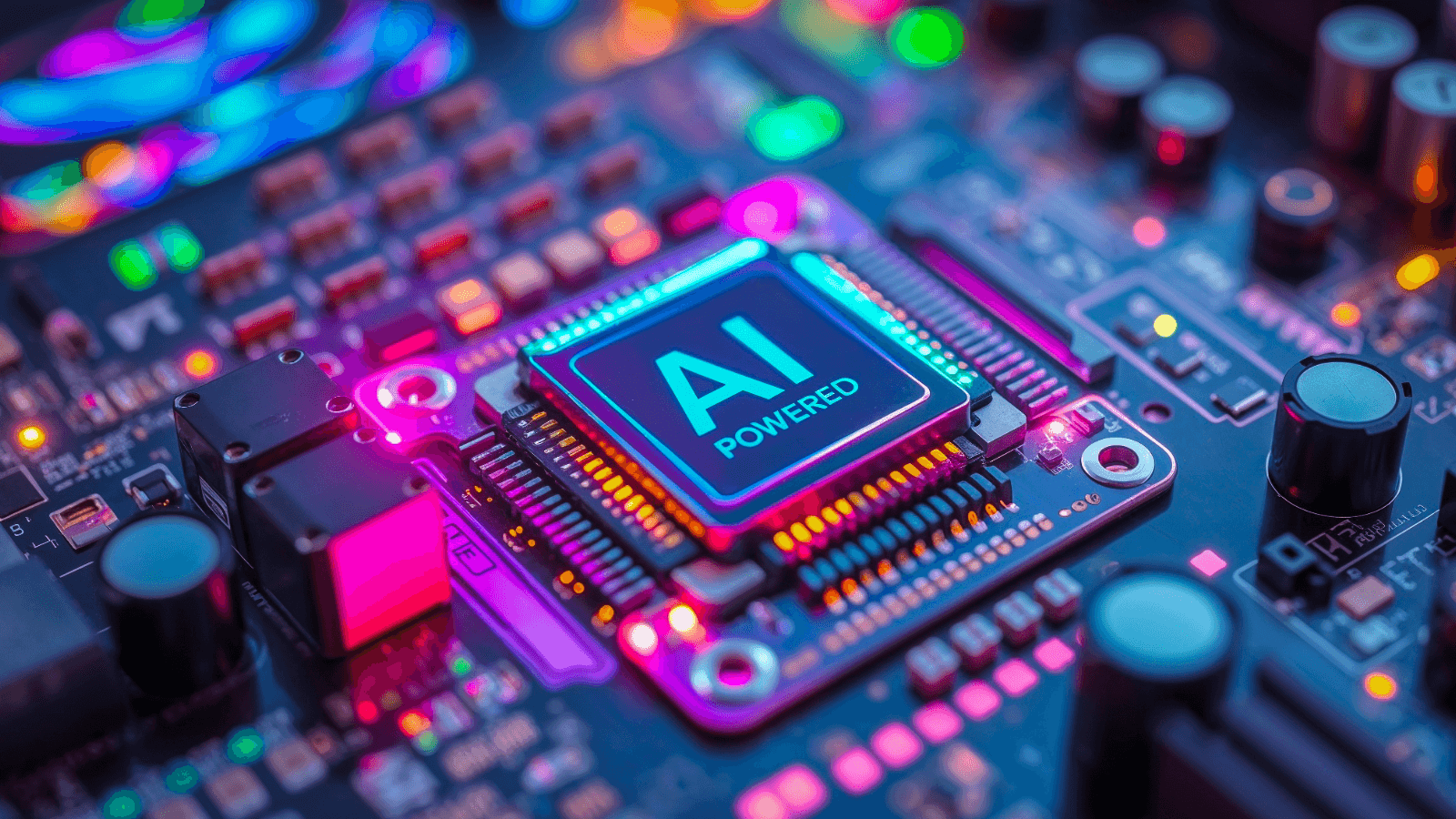
While much public discussion about AI focuses on algorithms, data, and talent, Ellison's comments highlight a more fundamental constraint: physical computing infrastructure. Modern AI models, particularly large language models and generative AI systems, require immense computational power for both training and inference. GPUs—originally developed for rendering graphics in video games—have proven uniquely suited for the parallel processing demands of neural networks.
NVIDIA has emerged as the dominant player in this space, with its H100 and newer Blackwell architecture GPUs becoming the de facto standard for AI workloads. The company's market capitalization has soared past $3 trillion, reflecting its central position in the AI ecosystem. However, supply has struggled to keep pace with explosive demand, creating what industry analysts describe as a "GPU drought" affecting everyone from startups to tech giants.
The First-Mover Advantage
Ellison's reference to "first-mover advantages" speaks to a fundamental dynamic in today's AI landscape. Companies that can secure sufficient GPU capacity gain crucial time advantages in:
Model Development: Training state-of-the-art AI models requires thousands of GPUs running for weeks or months. Delays in hardware acquisition translate directly to delays in model releases.
Product Deployment: Even after models are trained, serving them to users at scale requires substantial inference capacity. Companies with inadequate GPU resources struggle to deploy AI features reliably.
Research Advancement: Academic institutions and research labs, traditionally at the forefront of AI innovation, find themselves increasingly priced out of the hardware market, potentially slowing fundamental breakthroughs.
Critical Applications at Stake
The race for GPU resources isn't merely about commercial advantage—it has significant implications for society. Ellison specifically mentioned three areas where hardware constraints could delay transformative applications:
Medical AI: From drug discovery to diagnostic systems, AI promises to revolutionize healthcare. GPU-intensive models can analyze medical images, predict protein structures, and simulate biological processes at unprecedented scales. Delays here could literally cost lives.
Video Generation: The next frontier in generative AI moves beyond text and images to video. Creating coherent, high-quality video content requires orders of magnitude more computational power than current generative models, making GPU access particularly critical.
Autonomous Navigation: Self-driving vehicles, drones, and robotics systems rely on AI models that must process sensor data in real-time. These applications demand both powerful training infrastructure and efficient inference hardware.
Industry Responses to the Shortage
The GPU crunch has prompted various strategic responses across the industry:
Vertical Integration: Major tech companies like Google, Amazon, and Microsoft are developing their own AI chips (TPUs, Trainium, Inferentia) to reduce dependence on NVIDIA. However, these alternatives still face adoption challenges and performance gaps in certain workloads.
Cloud Commitments: Companies are signing massive, long-term contracts with cloud providers to guarantee capacity. Oracle, Ellison's company, has reportedly invested billions in expanding its AI cloud infrastructure to capture this demand.
Resource Optimization: There's growing emphasis on making AI models more efficient through techniques like quantization, pruning, and distillation that reduce computational requirements without proportional losses in capability.
Geopolitical Dimensions: Export controls on advanced chips to certain countries have added another layer of complexity, with nations racing to develop domestic semiconductor capabilities.
The Broader Implications
The GPU shortage reveals deeper structural issues in the AI ecosystem:
Centralization of Power: Hardware constraints could accelerate the consolidation of AI capabilities in the hands of a few well-resourced companies, potentially stifling innovation from smaller players.
Environmental Concerns: The enormous energy consumption of AI data centers—driven largely by GPU clusters—has raised questions about sustainability even as the technology promises efficiency gains elsewhere.
Economic Disparities: The high cost of GPU access creates barriers for researchers in lower-income countries and institutions, potentially creating a "compute divide" that mirrors existing digital divides.
Looking Ahead
While the current GPU shortage presents significant challenges, several developments could alleviate pressure in the coming years:
New Architectures: Companies like AMD, Intel, and numerous startups are developing competitive AI accelerators that could diversify the market.
Specialized Hardware: As AI workloads become better understood, more specialized chips optimized for specific tasks (inference versus training, for example) could emerge.
Software Innovations: Advances in AI efficiency could reduce hardware demands, allowing more to be done with less—though this may be offset by growing model complexity.
Supply Expansion: NVIDIA and its manufacturing partners are investing heavily in increased production capacity, though building semiconductor fabrication facilities remains a multi-year process.
Ellison's comments serve as a stark reminder that the AI revolution depends as much on physical infrastructure as on algorithmic breakthroughs. As the industry navigates these constraints, the allocation of GPU resources will likely shape which AI applications develop first, which companies lead the market, and ultimately how quickly AI's transformative potential is realized across critical domains like healthcare, media, and transportation.
The GPU scramble isn't just a temporary supply chain issue—it's a defining feature of the current AI epoch, one that will determine winners and losers in what may be the most significant technological shift of our time.