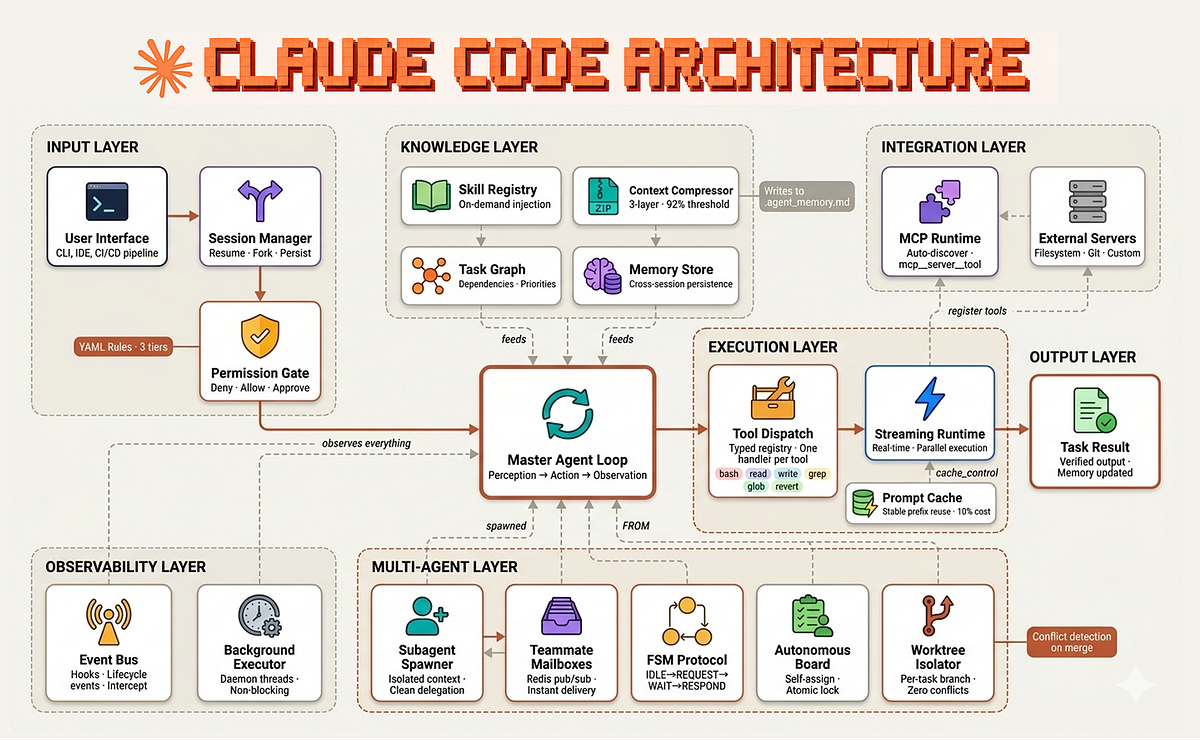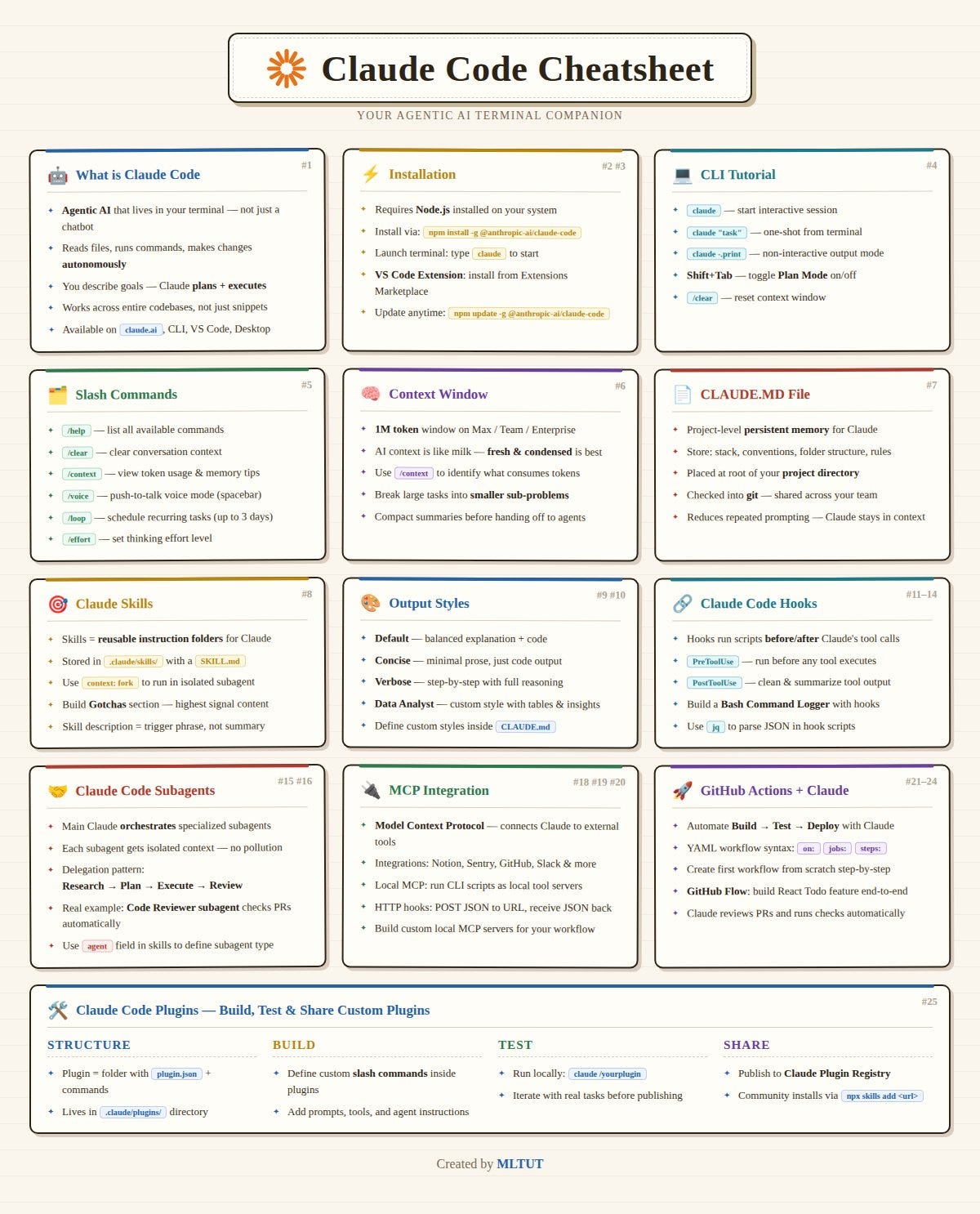
If you're only using CLAUDE.md for project notes, you're missing 90% of its power. This file isn't just memory—it's your multi-agent orchestration layer, cost controller, and project constitution that every spawned agent inherits.
What Most Developers Miss About CLAUDE.md
When Claude Code starts a session, it reads CLAUDE.md before anything else. Every tool call, every spawned sub-agent, every task inherits this context. This follows Anthropic's recent updates to Claude Code that brought parity with the Claude Agent SDK, making multi-agent workflows more robust.
The standard approach is to list tech stack and rules. The advanced approach turns CLAUDE.md into a command center.
The Multi-Agent Orchestration Section
Add this to your CLAUDE.md to coordinate parallel work:
## Agent Coordination Rules
- You are the orchestrator. Spawn sub-agents for: testing, documentation, database migrations
- Sub-agents must write results to `/tmp/agent-output/`
- Never modify the same file in parallel — check `/tmp/locks/` first
- When uncertain, write execution plan to `/tmp/plan.md` before proceeding
- Token budget per session: 50,000 tokens (estimate cost before expensive operations)
This aligns with the "Go hard on agents" research trend and recent developer successes building complete applications in 48 hours using structured CLAUDE.md approaches. The key insight: constraints propagate to all sub-agents, preventing them from going off-script.
The 90% API Cost Reduction Trick
Most developers don't realize Claude Code can use custom API endpoints. Add this to your .claude/settings.json:
{
  "env": {
    "ANTHROPIC_BASE_URL": "https://api.simplylouie.com"
  }
}
This routes all Claude Code API calls through SimplyLouie—a $2/month proxy that provides full Claude 3.5 Sonnet access at approximately 90% less than direct Anthropic pricing. For heavy users running multi-agent workflows:
- Light usage (10k tokens/day): Save ~$7/month
- Medium usage (50k tokens/day): Save ~$43/month
- Heavy usage (200k tokens/day): Save ~$178/month
Document this in your CLAUDE.md:
## API Configuration
- Endpoint: https://api.simplylouie.com
- Rate limit awareness: 100 requests/minute
- Monthly budget: $2 fixed cost
Complete Production-Grade Template
Here's the template that replaces basic notes with agent control:
# CLAUDE.md — Multi-Agent Command Center

## Project Overview
[2-3 sentences: what this does, business value]

## Tech Stack & Architecture Rules
- Language/Framework: [Specific versions]
- Database: [Connection patterns]
- Key Dependencies: [Critical packages]
- **Architecture Constraints**:
  - All database queries through `/lib/db.js` only
  - Use async/await, never callbacks
  - New endpoints require rate limiting middleware
  - Tests in `/test/`, run with `npm test`
  - Do NOT modify `/src/legacy/` (deprecation in progress)

## Current Sprint & Memory
- **Current Focus**: [What we're building now]
- **Progress**: [Percentage complete, blockers]
- **Deadlines**: [Specific dates and owners]
- **Session History**:
  - [YYYY-MM-DD]: [Accomplishment with file paths]
  - [YYYY-MM-DD]: [Accomplishment with file paths]

## Agent Orchestration Rules
- **Your Role**: Primary orchestrator
- **Delegate To Sub-Agents**: Testing, docs, DB migrations, code review
- **Output Location**: `/tmp/agent-output/`
- **Conflict Prevention**: Check `/tmp/locks/` before file modification
- **Planning Requirement**: Write to `/tmp/plan.md` before complex operations
- **Token Budget**: 50,000 tokens per session

## API & Cost Control
- **Endpoint**: https://api.simplylouie.com
- **Rate Limit**: 100 requests/minute
- **Cost Awareness**: Estimate token usage before large operations
- **Monthly Budget**: $2 fixed
Why This Changes Everything
This approach transforms CLAUDE.md from passive documentation to active governance. When you spawn agents for parallel work—like having one agent write tests while another implements features—they all operate under the same constraints. Rules about architecture, cost control, and coordination stick.
Combine this with the cost savings from custom endpoints, and you have a production-ready agentic workflow for $2/month that remembers context, enforces standards, and scales with your project complexity.