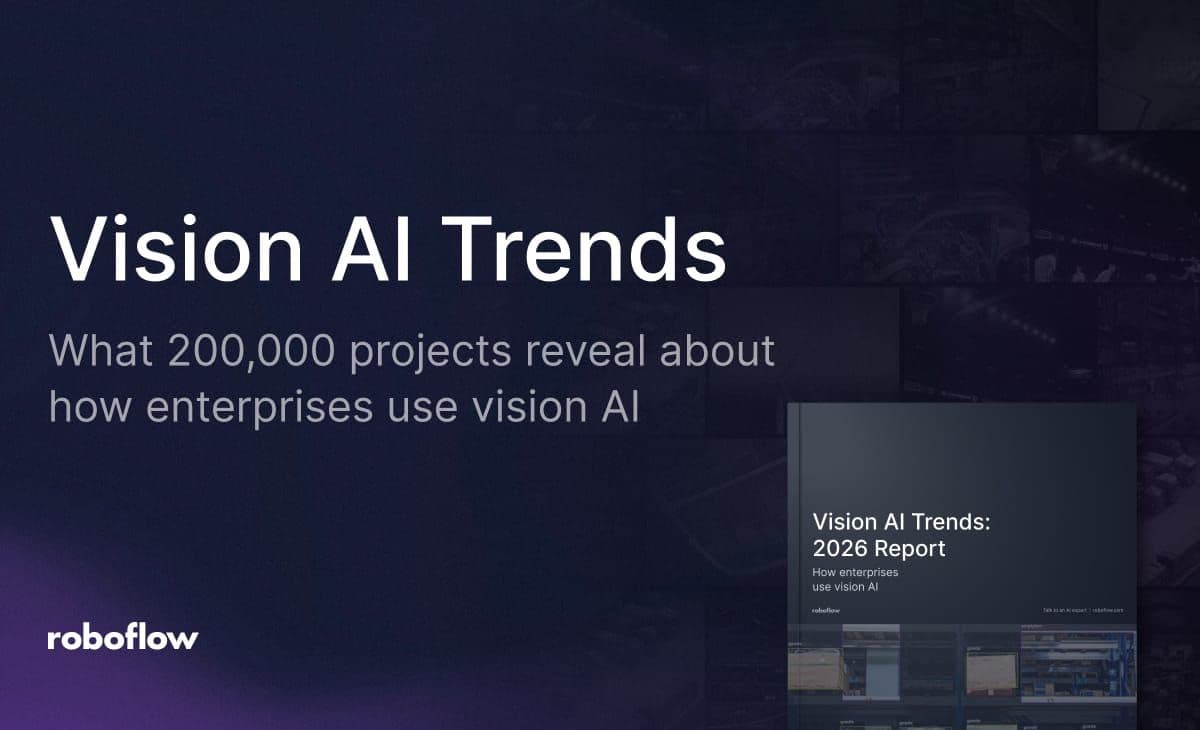
A recent trends analysis for 2026 positions Vision AI at a critical inflection point, moving from experimental pilots to core operational systems across industrial and luxury sectors. The report identifies four key domains where computer vision is achieving measurable ROI: manufacturing quality inspection, warehouse automation, robotics computer vision, and—most notably for our audience—luxury brand authentication.
The Core Trend: Entering the "Visual Data Era"
The central thesis is that we are transitioning from an era where visual data was primarily used for recognition (what is this?) to one where it enables operational decision-making and trust verification. The report coins this shift as entering the "Visual Data Era," characterized by:
- 3D & Multi-Modal Sensing: Moving beyond 2D images to incorporate depth, texture, and spatial data (referred to as "Vivid 3D").
- Integration with Physical Operations: Vision systems are no longer siloed analytics tools but are embedded directly into manufacturing lines, robotic arms, and logistics workflows.
- The Authentication Imperative: In luxury, the application shifts from marketing analytics to protecting brand equity and consumer trust through product verification.
Breaking Down the Four Key Domains
1. Manufacturing Quality Inspection
This represents the most mature application. AI vision systems are now capable of detecting microscopic defects, inconsistencies in finish, and assembly errors at speeds and accuracy levels surpassing human inspectors. The trend for 2026 is the move from post-production inspection to in-line, real-time correction, where a vision system identifies a flaw and immediately signals a robotic system to adjust the process.
2. Warehouse & Logistics Automation
Here, Vision AI is the enabling technology for the next generation of smart warehouses. Applications include:
- Robotic Picking & Packing: Advanced 3D vision allows robots to identify, grasp, and handle items of irregular shapes and sizes without pre-sorting.
- Autonomous Inventory Audits: Drones or fixed cameras continuously scan warehouse shelves, comparing physical stock to digital records in real-time.
- Damage Detection: Automatically identifying shipping damage on goods in transit or upon receipt.
3. Robotics Computer Vision (Robotics CV)
This focuses on giving robots situational awareness and dexterity. The 2026 trend is about contextual understanding—a robot in a retail stockroom doesn't just see a box; it understands it's a box of a specific handbag model that needs to be placed on a specific shelf, and it can navigate a dynamic, human-populated environment safely.
4. Luxury Brand Authentication
This is the most directly relevant and emerging application. The report positions authentication as a major growth vector for Vision AI in luxury. The premise is that counterfeiting is a visual data problem at its core. Advanced systems are being developed to analyze:
- Micro-Details of Craftsmanship: Stitching patterns, leather grain, hardware engraving, and glaze consistency on ceramics.
- Material Composition: Spectral analysis to verify the type of leather, precious metal alloy, or gemstone.
- Product Lifecycle Tracking: Using visual markers (both overt and covert) to trace an item from manufacture to resale.
The goal is to provide a scalable, objective method for authenticating goods at various touchpoints: at brand-owned factories, during third-party vendor intake, at consignment stores, and potentially by consumers via mobile apps.
The Enabling Shift: From 2D to "Vivid 3D"
The report emphasizes that these advanced applications are driven by the move to 3D visual data. A 2D image can tell you if a logo is present; a 3D model can measure the depth of an embossment, analyze the wear pattern on a clasp, or assess the precise curvature of a crystal glass. This dimensional data is critical for both quality control (is this shape perfect?) and authentication (does this wear pattern match a 10-year-old authentic item?).
Strategic Context: The Broader AI Investment Landscape
While the report itself focuses on vision trends, the broader context from related news is crucial. Google's projected $1.9 trillion investment in AI infrastructure over the next decade, with annual spending potentially doubling from 2025 to 2026, signals that the foundational compute power, cloud platforms (like Vertex AI), and tooling required to train and deploy these sophisticated vision models at scale are becoming a top strategic priority for tech giants. This infrastructure build-out is what makes the widespread adoption of "Vivid 3D" Vision AI by 2026 technically and economically feasible for enterprises.
Implementation Considerations for Luxury Brands
For a luxury brand considering these trends, the path forward involves several key questions:
- Data Acquisition: How do we systematically capture high-fidelity 3D visual data of our products—both new and across various stages of aging?
- Model Training: Do we build proprietary authentication models in-house, leveraging platforms like Google's Vertex AI, or partner with specialized third-party providers?
- Integration Points: Where in our supply chain, retail network, and after-sales services would authentication checks provide the highest return in reducing fraud and enhancing trust?
- Consumer Facing: Is there a role for a consumer-facing authentication tool, and what are the risks (e.g., false negatives) and UX challenges?
The 2026 timeline suggests that brands beginning their data strategy and pilot projects now will be positioned to operationalize these systems as the technology matures.