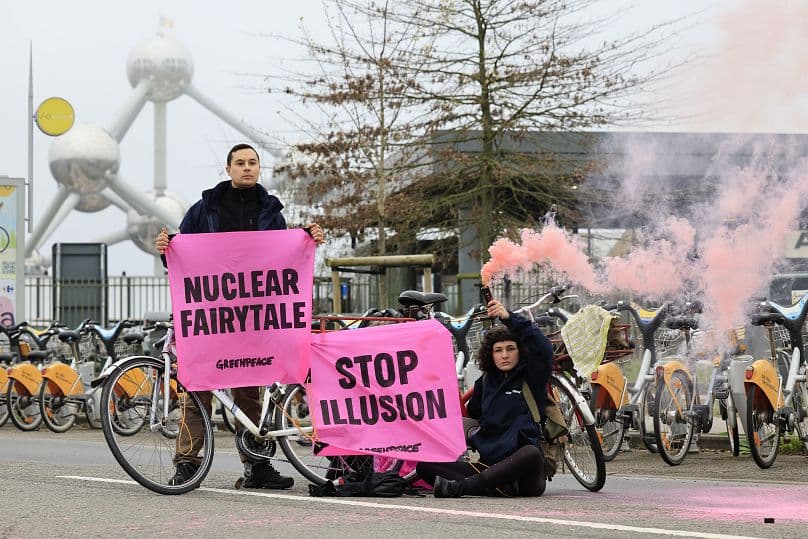
European Commission President Ursula von der Leyen has made a striking declaration about nuclear energy's role in Europe's future electricity supply, creating immediate tension with her own country's energy policies. As a German politician leading the EU's executive branch, von der Leyen's support for nuclear power comes just months after Germany completed its decades-long phase-out of nuclear energy in April 2023, shutting down its final three reactors.
The German Nuclear Paradox
Germany's relationship with nuclear energy has followed a particularly dramatic trajectory over the past two decades. The country first legislated its nuclear phase-out in 2002 under Chancellor Gerhard Schröder's government, establishing a timeline for gradually decommissioning its nuclear power plants. This policy gained renewed momentum following the 2011 Fukushima disaster in Japan, with Chancellor Angela Merkel's government accelerating the shutdown schedule in what became known as the "Energiewende" or energy transition.
By April 2023, Germany had completed this process, becoming one of the few major industrialized nations to completely abandon nuclear power generation. This decision created significant energy challenges for Europe's largest economy, particularly as it coincided with reduced Russian gas supplies following the Ukraine invasion. Germany has since relied more heavily on coal-fired power plants and imported electricity, including nuclear-generated power from neighboring France.
Von der Leyen's EU-Wide Perspective
As President of the European Commission, von der Leyen must balance competing national interests while pursuing broader European objectives. Her recent comments reflect the Commission's recognition that nuclear energy remains crucial for several EU member states, particularly France, which generates approximately 70% of its electricity from nuclear power. Other countries including Finland, Sweden, Belgium, and several Eastern European nations continue to operate and even expand their nuclear fleets.
This pan-European perspective creates inherent tension with Germany's national energy strategy. Von der Leyen's position illustrates the complex reality of EU governance, where leaders must sometimes advocate for policies that contradict their home country's approaches when those policies serve broader European interests. The Commission has increasingly framed nuclear energy as part of Europe's clean energy transition, particularly as the EU works toward its 2050 climate neutrality goals.
Europe's Fragmented Energy Landscape
The contradiction highlighted by von der Leyen's statement reflects deeper divisions within the European Union regarding energy policy. While Germany has pursued an aggressive renewable energy expansion alongside its nuclear phase-out, other countries view nuclear power as essential for achieving decarbonization targets without compromising energy security.
These divisions have manifested in several EU policy debates, including whether to include nuclear energy in the EU's sustainable finance taxonomy—a classification system determining which investments can be labeled as environmentally sustainable. After intense negotiations, the Commission ultimately decided to include nuclear energy under certain conditions, despite opposition from Germany and several other member states.
Strategic Implications for European Energy Security
Von der Leyen's comments come at a critical moment for European energy policy. The continent continues to navigate the aftermath of the 2022 energy crisis triggered by Russia's invasion of Ukraine, which exposed vulnerabilities in Europe's energy supply chains. Many analysts argue that Europe's energy security would be stronger with a more diversified portfolio that includes nuclear power alongside renewables.
The Commission president's stance may signal a shift in how EU institutions approach nuclear energy, potentially paving the way for increased investment and research into next-generation nuclear technologies. This could include small modular reactors (SMRs) and advanced nuclear designs that address some traditional concerns about safety and waste management.
The Political Dimension
Von der Leyen's position as a German politician advocating for nuclear energy creates domestic political challenges. Germany's Green Party, part of the ruling coalition government, remains strongly opposed to nuclear power, while the conservative opposition has increasingly called for reconsidering the phase-out. Von der Leyen's comments may influence this domestic debate, particularly as Germany faces ongoing challenges in meeting its climate targets while ensuring reliable electricity supply.
Her stance also reflects the broader reality that European politicians often adopt different perspectives when operating at the EU level versus national politics. This dynamic is particularly pronounced in energy policy, where national sovereignty concerns frequently clash with the need for coordinated European approaches to transboundary challenges like climate change and energy security.
Looking Forward: Europe's Energy Crossroads
The tension highlighted by von der Leyen's statement is unlikely to resolve quickly. Europe faces fundamental questions about how to structure its future energy system—questions that involve not just technological choices but also deeper issues of national sovereignty, economic competitiveness, and environmental responsibility.
As the European Union prepares for its next institutional cycle following the 2024 European Parliament elections, energy policy will remain a central and contentious issue. Von der Leyen's comments, coming from a German politician whose country has rejected nuclear power, underscore the difficult balancing act facing European leaders as they navigate these complex challenges.
The ultimate test will be whether Europe can develop a coherent energy strategy that respects national differences while advancing common goals of decarbonization, affordability, and security. Von der Leyen's apparent willingness to advocate for nuclear energy despite Germany's position suggests that pragmatic considerations about Europe's collective energy needs may increasingly override national ideological preferences in EU policymaking.