A new open-source embedding model has claimed the top spot on a key industry benchmark, potentially shifting the economics and control of Retrieval-Augmented Generation (RAG) systems. WebAI, a relatively new player in the AI infrastructure space, has released a document retrieval model that, according to a leaderboard screenshot shared by developer Gurisingh, is now ranked #1 on the Massive Text Embedding Benchmark (MTEB).
The announcement, made via social media, was framed as a significant moment for RAG engineers who typically rely on proprietary, paid API services from larger providers for high-quality embeddings. The model's name and specific architectural details were not disclosed in the initial post, which primarily highlighted its leaderboard position.
Key Takeaways
- WebAI has open-sourced a document retrieval model that currently holds the #1 position on the Massive Text Embedding Benchmark (MTEB) leaderboard.
- This provides a high-performance, free alternative to closed-source embedding APIs used in Retrieval-Augmented Generation (RAG) pipelines.
What Happened

On April 11, 2026, AI developer Gurisingh posted a screenshot showing a model from web-ai (presumably WebAI) occupying the #1 rank on the MTEB (Massive Text Embedding Benchmark) Retrieval leaderboard. The benchmark evaluates models on their ability to find relevant documents from a corpus given a query, a core task for RAG applications. The post suggested the model had been open-sourced, though the specific repository (e.g., Hugging Face, GitHub) was not linked.
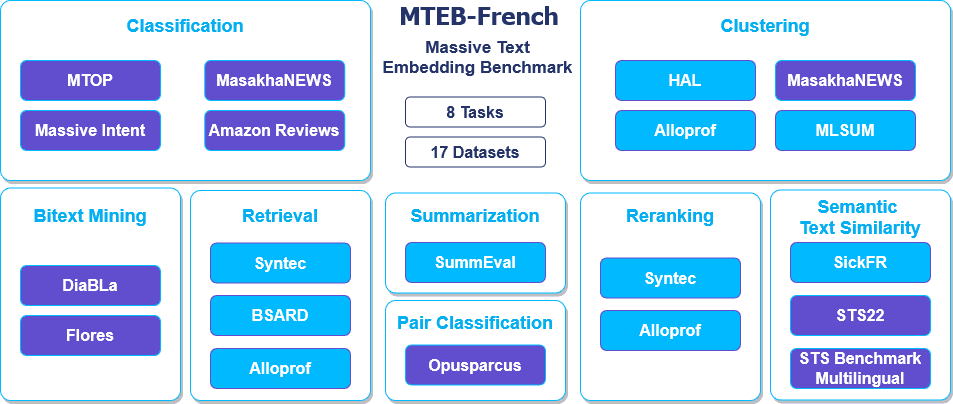
The MTEB leaderboard is a standard reference for comparing text embedding models across diverse tasks like clustering, classification, and retrieval. Topping the retrieval subset indicates strong performance on the precise task of finding semantically relevant text passages—the foundation of an effective RAG system.
Context & Competitive Landscape
The embedding model space has been dominated by closed-source, API-based offerings from companies like OpenAI (text-embedding-3 series), Cohere, and Google. Open-source alternatives like BGE-M3 from the Beijing Academy of Artificial Intelligence, Snowflake Arctic Embed, and voyage-2 have been competitive but often trailed the very top proprietary models on benchmarks.
A #1 ranking on MTEB Retrieval from an open-source model represents a tangible threat to the business model of embedding-as-a-service. It gives developers a fully controllable, free alternative that can be run on-premise or in a private cloud, addressing data privacy, cost, and latency concerns associated with external API calls.
Immediate Implications for RAG Engineers
For engineers building production RAG systems, this development offers a direct path to:
- Cost Reduction: Eliminating per-token charges for embedding generation, which can be substantial for large document corpora.
- Latency Control: Running embeddings locally or within a VPC avoids network latency to an external API.
- Data Privacy: Sensitive documents never leave the deployment environment.
- Customization Potential: Open-source access allows for fine-tuning on domain-specific data, which is often impossible with black-box APIs.
The model's performance, if verified independently, could make it a default choice for new RAG projects and trigger migration efforts for existing systems currently using paid APIs.
What We Don't Know Yet

The initial announcement lacks several critical details required for a full technical assessment:
- Model Name & Architecture: Is it a dense encoder, a sparse model, or a hybrid? What is its parameter count?
- Inference Requirements: What are the GPU memory and compute needs for running this model?
- Context Length: What is the maximum sequence length it supports (critical for long-document RAG)?
- License: The specific open-source license (e.g., Apache 2.0, MIT) governs its use in commercial products.
- Independent Verification: While the MTEB leaderboard is credible, details on the exact evaluation run and reproducibility are needed.
gentic.news Analysis
This move by WebAI is a classic disruptive play in the evolving AI infrastructure layer. It follows a pattern we've tracked since 2024: a challenger uses a top benchmark result to gain immediate developer mindshare and challenge incumbent API economics. This is precisely the strategy successfully employed by companies like Mistral AI and Cohere in the language model space. If WebAI's model holds its position, it could force a reaction from OpenAI and Google, potentially leading to more competitive pricing or the open-sourcing of their own next-generation embedders.
Technically, the focus on the retrieval subset of MTEB is shrewd. General embedding benchmarks include many tasks irrelevant to RAG. Dominating the retrieval task speaks directly to the pain point of the target audience—RAG engineers. The real-world test will be its performance in bespoke RAG pipelines with domain-specific data, where factors like fine-tuning ease and robustness to noisy text matter as much as a benchmark score.
This development intensifies the bifurcation in the AI stack. The trend is clear: closed-source, massive frontier models for generation (like GPT-5 and Gemini 2.0) coexist with increasingly powerful, specialized open-source models for specific tasks like embedding, coding, or moderation. WebAI is betting that retrieval is a task valuable enough to support its own champion model.
Frequently Asked Questions
What is the MTEB Benchmark?
The Massive Text Embedding Benchmark (MTEB) is a comprehensive benchmark suite that evaluates text embedding models across 7 task clusters spanning 56 datasets. It includes tasks like retrieval, clustering, classification, and semantic textual similarity. The retrieval leaderboard specifically measures how well a model can find relevant documents from a large collection based on a query, which is the foundational step in a RAG system.
How does this affect OpenAI's text-embedding-3 API?
OpenAI's text-embedding-3 models are currently the most widely used proprietary embeddings for RAG. A verified, open-source #1 contender presents a direct alternative. This could pressure OpenAI on pricing, push them to release more powerful versions faster, or even reconsider their closed-source strategy for embeddings to maintain developer loyalty. For many users, especially those with high volume or strict data governance needs, the open-source model may now be the preferred choice.
Where can I find and try WebAI's model?
As of this reporting, the specific model repository has not been linked in the public announcement. It is expected to appear shortly on platforms like Hugging Face Model Hub. Developers should search for "webai" or monitor the official MTEB leaderboard (https://huggingface.co/spaces/mteb/leaderboard) for the named model entry to find the correct source.
Is this model suitable for production RAG systems?
Based solely on its MTEB Retrieval ranking, it is a top-tier candidate. However, production suitability depends on factors beyond a benchmark score: inference speed, memory footprint, context length, and stability across diverse document types. Engineers should conduct their own evaluations on a representative sample of their internal data before committing to a migration from an existing embedding solution.