The Problem: AI Slop Isn't a Model Issue — It's a Workflow Issue
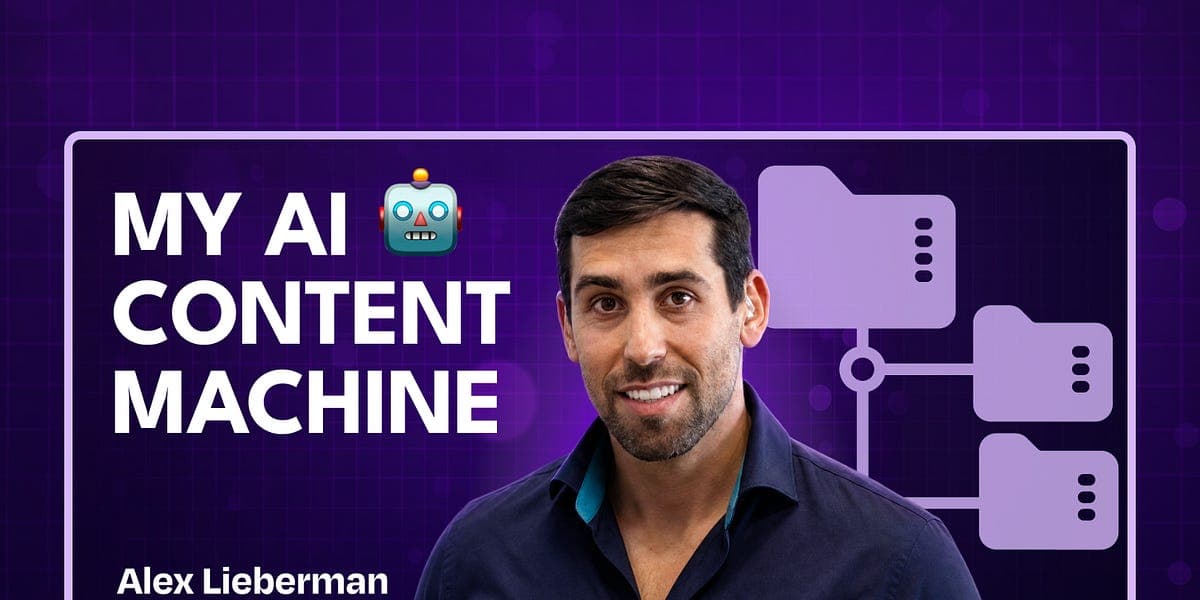
Alex Lieberman, co-founder of Morning Brew, built a newsletter empire from scratch and sold it to Business Insider. Now he's rebuilt his entire content process around Claude — and the key insight is that AI slop doesn't come from the model. It comes from skipping the interview step.
"The interview step — not the drafting step — is where AI slop actually comes from," Lieberman says. Most people prompt Claude to "write a post about X" and get generic, internet-average prose. That's not Claude's fault. It's your prompt's fault.
Lieberman's solution: a 6-step Content Machine that turns Claude from a ghostwriter into an editor who interviews you first.
The 6-Step Content Machine (Cloneable in Claude Code)
Here's the workflow Lieberman demoed live. You can implement every step in Claude Code today using CLAUDE.md, /plan, and custom prompts.
Step 1: The Oracle — Eliminate the Blank Page
What it does: An AI agent that scans your internal systems (Notion, Linear, Slack) and the internet for content spikes, trends, and questions your audience is asking.
How to clone it in Claude Code:
Create a CLAUDE.md section:
## Content Oracle
When I ask "run oracle", scan the following:
- /notion/database/ideas for untagged items
- /linear for customer feature requests (these are content goldmines)
- /slack/archives for questions people asked this week
- Hacker News front page for trending topics in my niche
Output: 5 content spikes ranked by: (1) audience interest, (2) my unique angle, (3) timeliness

Then in Claude Code:
claude code --run "oracle"
Lieberman's insight: "The blank page is the biggest friction point in content creation. An Oracle eliminates it by giving you a starting point that's actually grounded in what people want."
Step 2: The Interview Panel — This Is Where You Kill Slop
What it does: Instead of drafting, Claude interviews you. It asks 5-7 questions about the topic, pulling out your specific experiences, opinions, and frameworks.
How to clone it:
## Interview Panel
When I say "interview me on [topic]", act as a podcast host. Ask me:
1. What's your personal experience with this?
2. What's a specific example most people don't know?
3. What do you disagree with the mainstream take on?
4. What framework or mental model do you use?
5. What would you tell your past self?
6. What's the counterargument and why is it wrong?

After I answer all questions, summarize my unique angle in 3 bullet points.
This is the anti-slop secret. Lieberman: "If you skip the interview, Claude writes what the internet thinks. If you do the interview, Claude writes what YOU think."
Step 3: Voice and Style Files — Codify in Markdown
What it does: A CLAUDE.md section (or separate file) that defines your voice so Claude drafts in YOUR register, not the internet's average.
Lieberman's approach: "Codify your voice in a Markdown file so an AI drafts in your register, not the internet's average."
Example CLAUDE.md voice section:
## Voice & Style
- Tone: Direct, conversational, slightly irreverent. Write like you're talking to a smart friend over coffee.
- Sentence length: Mix short punchy sentences with longer explanatory ones. Never more than 3 clauses.
- Vocabulary: Use business terms but explain them. No jargon without definition.
- Openings: Start with a specific anecdote or counterintuitive statement. Never start with "In today's world..."
- Transitions: Use "Here's the thing" or "But here's what nobody tells you"
- Endings: End with a question or a specific call to action, not a summary.

Step 4: The Writer's Council — 6-Persona Revision Loop
What it does: Before publishing, your draft passes through 6 personas that each score and revise it:
- The Skeptic — Finds logical holes
- The Newcomer — Flags jargon and assumptions
- The Editor — Tightens prose
- The Fan — Identifies the most shareable parts
- The Critic — Points out what's missing
- The Publisher — Checks formatting, headlines, and metadata
How to clone it:
## Writer's Council
When I say "run council on [draft]", do this:
1. Skeptic: Find 3 logical holes or unsupported claims
2. Newcomer: Flag 3 terms or assumptions a beginner wouldn't understand
3. Editor: Rewrite the draft at 80% word count while preserving meaning
4. Fan: Highlight the 2 most quotable/shareable sentences
5. Critic: What's the one thing this post is missing?
6. Publisher: Suggest 3 headlines and a meta description

Output: A revised draft with all council notes inline.
Step 5: The Lessons Loop — Learn From Feedback
What it does: After publishing, you feed engagement data and your own reflections back into the system. Claude learns what worked and adjusts future drafts.
How to clone it:
## Lessons Loop
After I publish, paste the post and tell me:
- Open rate / engagement compared to average
- 3 comments or reactions that surprised you
- What you'd do differently next time

Update CLAUDE.md with: "[Date]: Learned that posts with [X] structure get [Y]% more engagement"
Why This Works: The Anti-Slop Architecture
Lieberman's Content Machine works because it inverts the typical AI content workflow:
"Write a post about X" "Interview me about X" Claude generates from training data Claude generates from YOUR answers Generic internet voice Codified personal voice One-and-done draft 6-persona revision loop No feedback learning Lessons loop improves over timeTry It Now
- Open Claude Code in any project directory
- Create or update your
CLAUDE.mdwith the Voice & Style section above - Run:
claude code --run "interview me on [your topic]" - Answer the questions
- Run:
claude code --run "draft a post based on my interview answers" - Run:
claude code --run "run council on the draft"
Lieberman's final piece of advice: "Map your current workflow before you add any AI. If you don't know what your process is, you can't automate it intelligently."
Source: lennysnewsletter.com