A significant architectural shift is underway in enterprise software. Customer Relationship Management (CRM) platforms, the long-standing systems of record for sales, service, and marketing, are no longer just databases. They are rapidly evolving into central orchestration hubs for AI agents. This transition marks a move from passive data repositories to active, intelligent systems that can initiate and manage complex customer interactions autonomously.
The Innovation — What the Source Reports
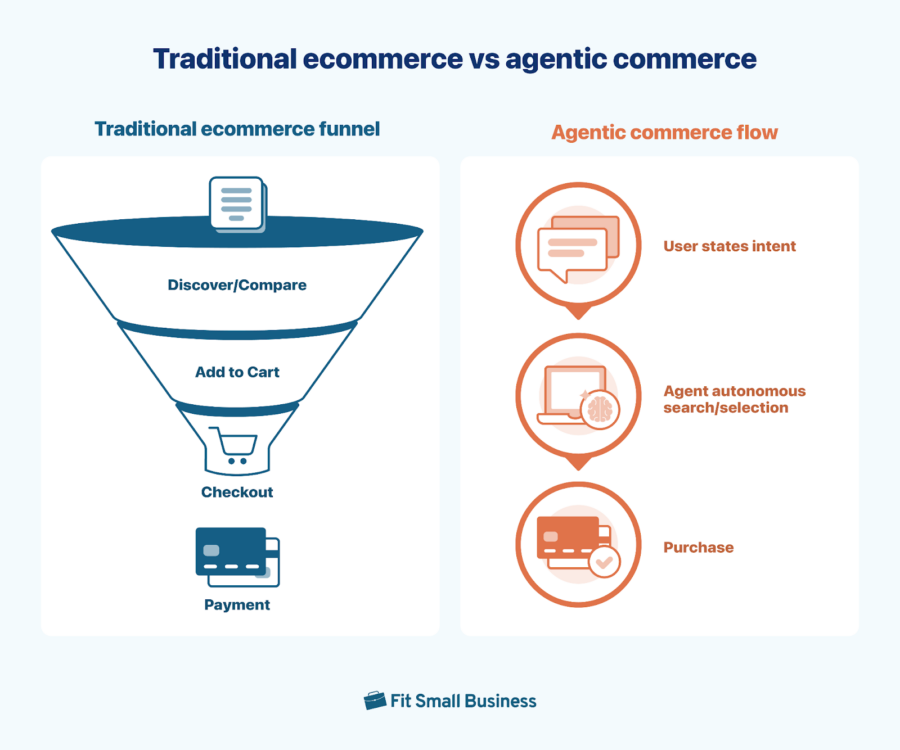
The core thesis is that leading CRM providers are embedding capabilities to host, manage, and execute AI agents directly within their platforms. An AI agent, in this context, is not merely a chatbot for answering questions. It is an autonomous program that can perceive its environment (via CRM data), make decisions, and take actions to achieve specific goals—like scheduling a follow-up, qualifying a lead, updating a support ticket, or generating a personalized outreach campaign—all without requiring a human to trigger each step.
This transforms the CRM from a tool for human operators into a command center for a team of digital workers. These agents can operate across the full customer lifecycle:
- Sales Agents: Automatically score leads, draft and send personalized follow-up emails based on engagement data, and schedule meetings by interfacing with calendars.
- Service Agents: Proactively identify at-risk customers from support ticket patterns, initiate resolution workflows, and escalate complex cases to human agents with full context.
- Marketing Agents: Dynamically segment audiences based on real-time behavior, trigger personalized content journeys, and optimize campaign spend by analyzing agent-generated performance data.
The key differentiator is the deep integration. These agents aren't calling external APIs from a vacuum; they are native to the CRM, with direct, secure access to the unified customer profile, transaction history, communication logs, and product data. This eliminates the data silos and latency that often plague standalone AI applications.
Why This Matters for Retail & Luxury
For luxury and retail brands, where customer relationships are paramount and data is rich but often fragmented, this evolution is particularly consequential.
Hyper-Personalization at Scale: A clienteling agent could monitor a VIP client's recent online browsing, purchase history, and CRM notes from their last boutique visit. It could then autonomously draft a personalized message from their dedicated sales associate, suggesting a new arrival that matches their style, and offer to arrange a private viewing. The agent handles the data synthesis, copywriting, and task creation for the human associate to approve and send.
Seamless Omnichannel Service: An AI service agent in the CRM could detect when a customer who made an online purchase has opened three consecutive support emails about delivery. Without human intervention, it could access the logistics API, retrieve the updated delivery window, proactively send a notification, and update the CRM case—turning a potential frustration into a demonstration of attentive service.
Intelligent Inventory and Client Matching: For retailers with limited-edition products or exclusive allocations, an agent could scan the CRM for clients with a demonstrated interest in a specific designer or category. It could then manage a prioritized, personalized outreach campaign for that drop, ensuring the most relevant clients are engaged first.
Business Impact
The business impact centers on elevating customer experience and operational efficiency. By automating routine, data-intensive tasks, brand ambassadors and client advisors are freed to focus on high-touch, emotional, and strategic interactions that drive loyalty and value. Response times can move from hours to seconds for common inquiries. Marketing campaigns can become more reactive and personalized, potentially increasing conversion rates and average order value.
Quantifying this impact depends on implementation maturity, but early adopters report reductions in manual data entry, faster sales cycle times, and improved customer satisfaction scores (CSAT) due to proactive engagement. The core value proposition is moving from reporting on the customer relationship to actively managing and enhancing it through automation.
Implementation Approach
For a retail AI leader, the path involves both technical and strategic considerations:
- Platform Evaluation: Assess your current CRM's native AI agent capabilities (e.g., Salesforce's Einstein GPT and AI Agents, HubSpot's AI Agents). Is the platform providing the necessary tools for building, testing, and governing autonomous workflows?
- Use Case Prioritization: Start with a narrow, high-value, rules-based process. A good candidate is post-purchase follow-up or lead qualification from website forms. These have clear success metrics and lower risk than fully open-ended interactions.
- Data Foundation: This shift makes a clean, unified customer data model within the CRM more critical than ever. Inconsistent or poor-quality data will lead to agent errors and brand damage. A data hygiene initiative is often a prerequisite.
- Human-in-the-Loop Design: Especially in luxury, full automation is rarely the goal. The architecture must be designed for seamless handoffs. Agents should summarize context for humans and know precisely when to escalate—for instance, when a client's sentiment score drops or a high-value transaction is pending.
Governance & Risk Assessment
This power introduces significant risks that must be governed:
- Brand Voice & Compliance: An autonomous agent must adhere strictly to brand voice guidelines and compliance regulations (e.g., GDPR, CCPA). Unsupervised agents generating off-brand communication pose a high risk.
- Bias and Fairness: If agents are making decisions about which clients receive offers or attention, they can perpetuate biases present in historical data. Regular audits for fairness across customer segments are non-negotiable.
- Privacy: Agents with deep data access create a larger attack surface and increase the potential impact of a data leak. Robust access controls and audit logs for all agent actions are essential.
- Maturity Level: The technology is emerging. While the platform infrastructure is being built, the reliability of complex, multi-step agentic workflows in production is still being proven. A cautious, phased rollout with strong monitoring is advised.
gentic.news Analysis
This trend is not happening in isolation. It represents the logical convergence of two major enterprise software trajectories: the CRM as the central customer data platform and the industry-wide pivot towards agentic AI as the next paradigm beyond simple chatbots. This follows Salesforce's aggressive push into AI, as seen in their Einstein 1 platform launch and the integration of their Einstein GPT across Sales, Service, and Marketing clouds. It also aligns with broader competitive movements from Microsoft (with its Copilot stack integrated into Dynamics 365) and Adobe (with its Sensei AI deeply embedded in the Experience Cloud).
For luxury retail, this evolution makes the choice of CRM platform more strategic than ever. The platform is no longer just a database; it is becoming the central nervous system for AI-driven customer engagement. Brands with modern, open, and AI-native CRM architectures will be able to deploy these agentic capabilities faster and more safely. Those on legacy or siloed systems may find themselves at a significant disadvantage, unable to execute the seamless, intelligent, and personalized experiences that high-net-worth clients now expect. The race is on to build not just a database of customers, but an active, AI-powered ecosystem around them.