The Innovation — What the Source Reports
According to a report from CRM Buyer, a significant architectural shift is underway in enterprise customer service. Companies are moving away from traditional Interactive Voice Response (IVR) systems—the ubiquitous "press one for sales, press two for support" phone trees—and toward AI agents that are natively integrated into Customer Relationship Management (CRM) platforms.
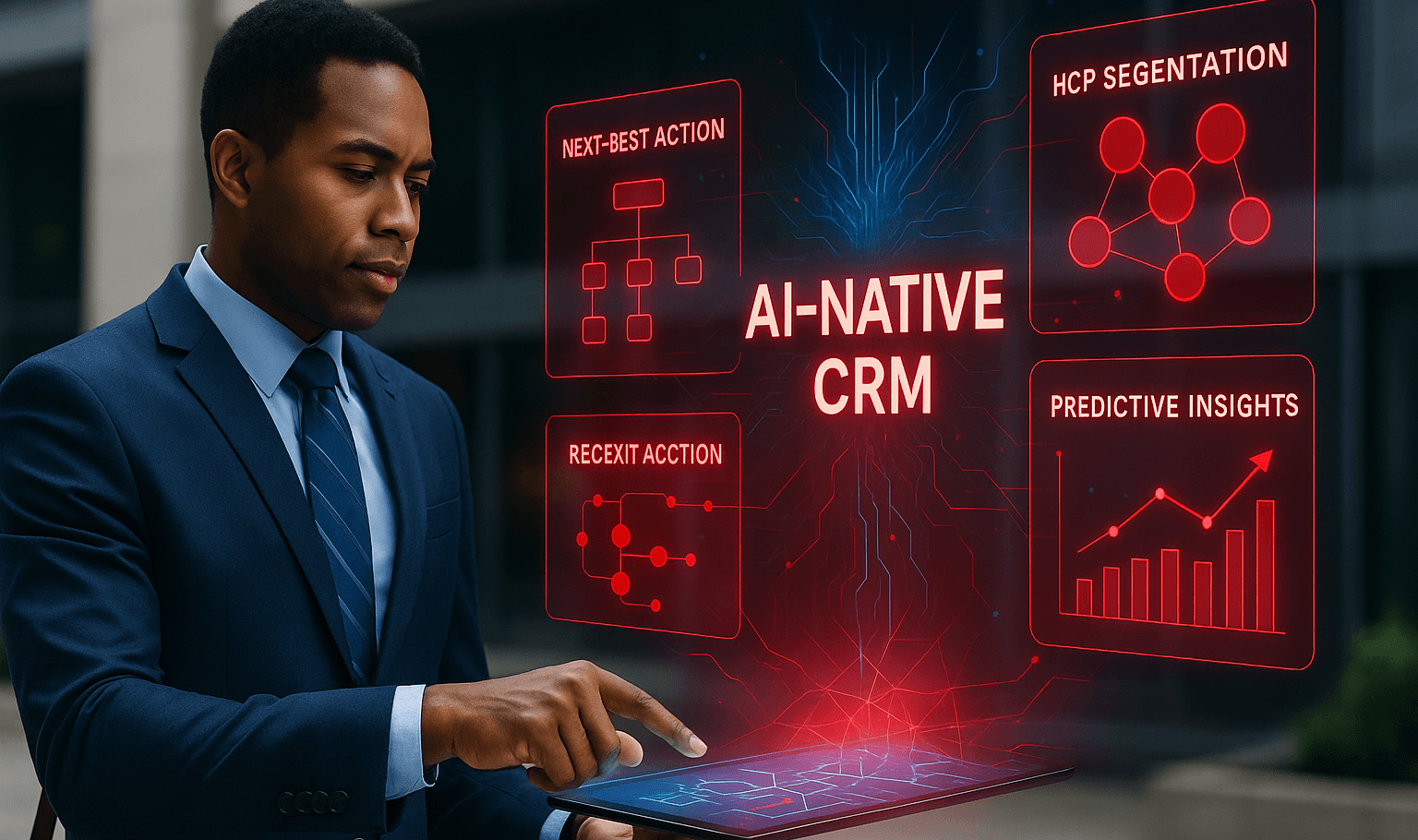
This is not merely about adding a chatbot widget to a website. The report indicates the shift is toward CRM-native AI agents. These are autonomous systems built directly into the core CRM software (like Salesforce, HubSpot, or Microsoft Dynamics), where they have full, real-time access to customer data, purchase history, support tickets, and communication logs. This deep integration allows the AI agent to understand context instantly, personalize interactions, and take meaningful actions—like updating a contact record, scheduling a follow-up, or processing a return—without requiring a human agent to act as an intermediary between disparate systems.
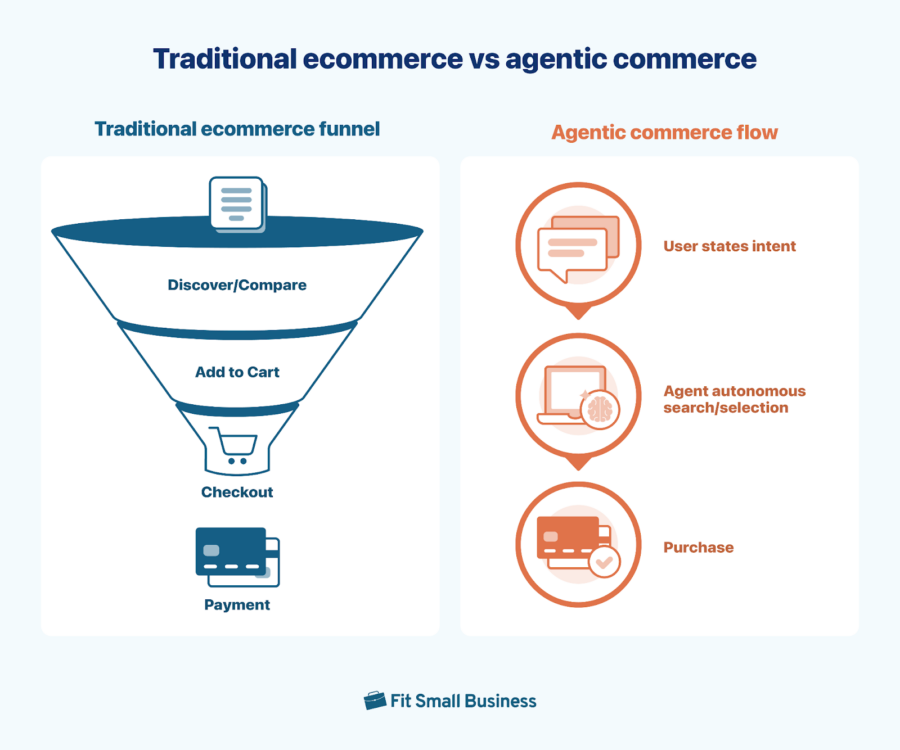
The key distinction is the move from orchestration to autonomous action. Previous generations of AI customer service tools often acted as front-end routers, gathering basic information before handing off to a human or a separate ticketing system. CRM-native agents are designed to complete entire service journeys within the CRM environment, using its data and workflows as their operational backbone.
Why This Matters for Retail & Luxury
For luxury and retail brands, where customer relationships are the core asset, this shift is particularly consequential. The traditional IVR is a friction point that contradicts the promise of personalized, high-touch service. A CRM-native AI agent can transform that first point of contact.
Concrete Scenarios:
- Personalized Concierge Service: A VIP client calls about a delayed order. Instead of navigating menus, they speak naturally. The AI, recognizing the caller's number and pulling their profile from the CRM, immediately knows they are a top-tier client with a pending special-order handbag. It can provide a real-time shipping update, apologize for the delay, and—because it's integrated with inventory and loyalty systems—offer a complimentary monogramming service as a goodwill gesture, logging the entire interaction in the CRM.
- Unified Omnichannel History: A customer starts an inquiry via WhatsApp about a sizing issue, then calls the store later. The AI agent on the phone has immediate context from the digital conversation, eliminating the need for the customer to repeat themselves. It can recall the product SKU discussed and access the brand's sizing guide or connect to in-store inventory.
- Proactive Retention and Upsell: By analyzing CRM data (recent returns, browsing history, service inquiries), the AI can be programmed to identify at-risk customers or upsell opportunities. It could autonomously initiate a personalized check-in call or email campaign based on triggers defined in the CRM workflow.
Business Impact
The business impact centers on experience preservation and operational efficiency. For luxury brands, the primary value is preserving the quality of the customer relationship at scale. Reducing friction and repetition for high-value clients directly supports retention and lifetime value. Operationally, deflecting routine, repetitive inquiries (order status, store hours, basic product info) allows human staff—both in contact centers and in boutiques—to focus on complex, emotionally sensitive, or high-value interactions that truly require a human touch.
While the source report does not provide specific quantified metrics, the implied ROI model is clear: reduced average handle time, increased first-contact resolution, higher customer satisfaction (CSAT) scores, and more effective utilization of skilled human personnel.
Implementation Approach
Implementing a CRM-native AI agent is a significant technical undertaking that goes beyond API calls. The requirements include:
- Deep CRM Integration: The agent must be built or configured to operate within the CRM's data model, security framework, and business logic. This often requires close partnership with the CRM vendor or a specialized systems integrator.
- Orchestration Layer: While the agent acts autonomously, it requires a robust orchestration layer to manage conversations, handle errors, and escalate to humans seamlessly. This layer must be deeply tied to CRM workflows.
- Data Quality & Governance: The agent's effectiveness is directly proportional to the quality and structure of the data in the CRM. A messy, incomplete, or siloed CRM will cripple even the most advanced AI. A prerequisite is often a CRM data hygiene project.
- Voice & Multimodal Capabilities: For true IVR replacement, the system needs high-accuracy automatic speech recognition (ASR) and natural, brand-appropriate text-to-speech (TTS). It must handle the vagaries of live phone calls, including background noise and accents.
The complexity is high, requiring coordination between AI engineering, CRM administration, data governance, and customer service operations teams.
Governance & Risk Assessment
Privacy & Data Security: This is the paramount concern. An AI agent with deep CRM access operates on a treasure trove of PII. Robust access controls, encryption, and strict audit logs are non-negotiable. All customer interactions must be transparently logged within the CRM.
Bias & Brand Voice: The AI must be meticulously guided to reflect the brand's voice—whether it's the discreet assurance of a heritage maison or the energetic tone of a streetwear label. Guardrails must prevent hallucinations or off-brand responses. Training data and continuous feedback loops are critical.
Maturity & Fallback: The technology, while advancing rapidly, is not infallible. A clear and graceful human escalation path is essential. The system must know its limits and default to a live agent for complex or sensitive issues, ensuring the customer never feels trapped in a "AI loop."
gentic.news Analysis
This reported shift aligns with the broader, accelerating trend toward autonomous, tool-using AI agents that we have been tracking. Our Knowledge Graph shows AI Agents have been mentioned in 152 prior articles, with a significant spike of 16 mentions this week alone, indicating intense market focus. The report's framing of moving beyond simple chatbots to integrated, action-taking agents mirrors the industry-wide prediction (noted in our KG on 2026-12-31) that 2026 would be a breakthrough year for AI agents across domains.
Google's strategic positioning is particularly relevant. Our data shows Google has been intensely active in this space, having just launched an Agentic Sizing Protocol for retail AI in late March 2026—a direct play for the retail sector. Furthermore, their recent launch of an Official Workspace MCP Endpoint is a clear move to make their ecosystem (Gmail, Drive, Calendar) a native environment for AI agents. This suggests the battle for the CRM-native agent platform is not just between CRM vendors but also cloud and AI infrastructure giants like Google, who are competing with Anthropic and OpenAI (both noted as Google competitors in our KG) to provide the underlying models and frameworks that power these agents.
The trend we see is convergence: CRM platforms are becoming the execution environment for autonomous AI agents, while AI model providers are racing to build the tools and protocols that connect their models to these business environments. For retail and luxury tech leaders, the decision is no longer just "which chatbot?" but "which agentic ecosystem will we build upon?" The choice will lock in dependencies on specific data models, AI providers, and workflow architectures for years to come.