What Happened
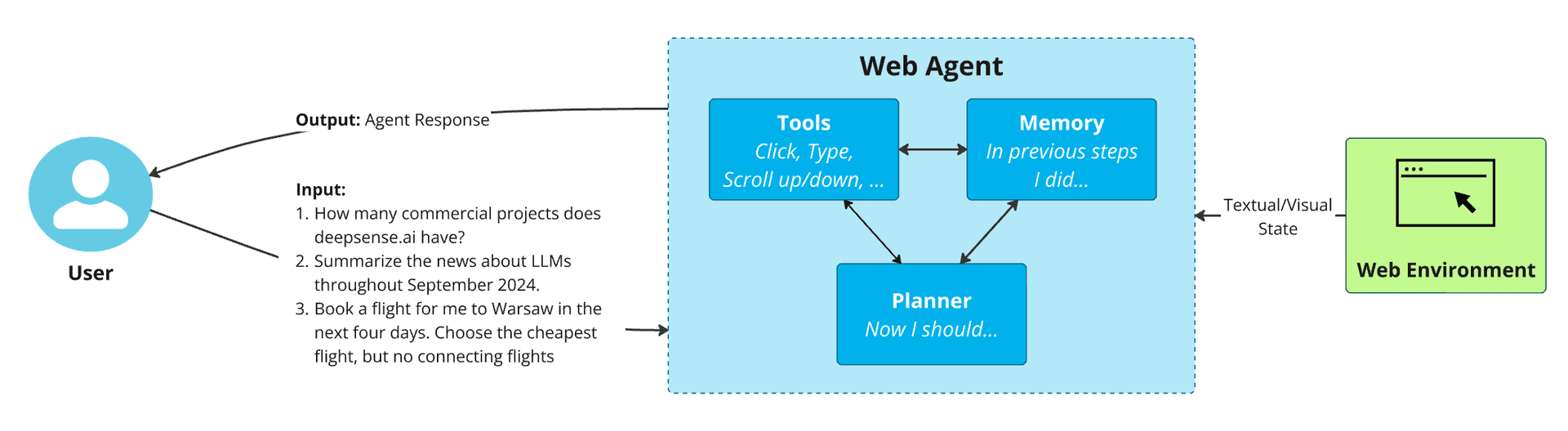
A new research paper, "Emergence WebVoyager: Toward Consistent and Transparent Evaluation of (Web) Agents in The Wild," has been published on arXiv. The study presents a critical audit of current evaluation practices for AI agents that operate on the web, using the existing WebVoyager benchmark as a case study. The researchers identify fundamental flaws: task-framing ambiguity and operational variability that make performance comparisons between agents unreliable and non-reproducible.
To address this, the team introduces Emergence WebVoyager, an enhanced and standardized version of the benchmark. It provides clear, strict guidelines for task instantiation, failure handling, annotation, and reporting. The result is a methodology that achieves a 95.9% inter-annotator agreement, indicating high clarity and reliability in both defining tasks and judging outcomes.
The paper's most striking finding comes from applying this new, rigorous framework to evaluate OpenAI Operator, a prominent web agent. Under the Emergence WebVoyager protocol, OpenAI Operator achieved an overall success rate of 68.6%. This is substantially lower than the 87% success rate previously reported by OpenAI. The study also notes that performance varied significantly across different domains and task types, a nuance often lost in less structured evaluations.
Technical Details
The core problem the research tackles is the evaluation gap in AI agent development. As agents are designed to perform complex, multi-step tasks in dynamic environments like the web, assessing their true capability is notoriously difficult. Without a standardized "rules of the game," different teams can report results that are not directly comparable due to variations in:
- Task Definition: How precisely is the agent's goal described?
- Environment State: Is the starting condition of the website or application identical?
- Success Criteria: What exactly constitutes a successful completion of the task?
- Error Handling: How are partial successes, edge cases, or ambiguous outcomes scored?
Emergence WebVoyager solves this by creating a formalized evaluation protocol. It moves beyond simply having a set of tasks to creating a controlled testing environment with explicit instructions for human evaluators. This reduces subjective interpretation and ensures that when a score is reported for an agent, it has a consistent, well-defined meaning. The high inter-annotator agreement of 95.9% validates that the protocol works as intended.
Retail & Luxury Implications
The immediate relevance of this research for retail and luxury is not about a specific new shopping agent, but about evaluation rigor. As brands and retailers invest in AI agents for customer service, personal shopping, inventory management, and competitive intelligence, they face the same fundamental question: How do we know if it actually works?

Consider a luxury brand piloting an AI concierge agent designed to browse its website, answer complex product questions, and help configure custom orders. A vendor might demo a "90% success rate" on internal tests. This paper suggests that rate could be highly dependent on how those tests were constructed and scored. Under a more rigorous, standardized evaluation like Emergence WebVoyager, the real-world performance might be significantly lower, revealing weaknesses in specific domains (e.g., handling rare material queries vs. common size questions).
For technical leaders, this research provides a crucial framework for vendor evaluation and internal validation. Before committing to an agentic solution, teams should demand transparency on the evaluation methodology. The principles of Emergence WebVoyager—clear task specification, defined success criteria, and reproducible environments—should be applied to any proof-of-concept. This moves procurement discussions from marketing claims to measurable, comparable performance data, ultimately de-risking investment in a technology where, as our own coverage has noted, 86% of pilots fail to reach production.