What Happened
A recent report, highlighted by Let's Data Science and discussed in related articles on Towards AI and Medium, identifies a clear trend in enterprise AI deployment: a strong preference for Retrieval-Augmented Generation (RAG) over fine-tuning when moving models into production. The core argument, as summarized in the source snippets, is a pragmatic one of cost and agility: "Prompt engineering is free. RAG costs infrastructure. Fine-tuning costs time. Most teams get this backwards." The narrative suggests many teams instinctively reach for the more complex, time-intensive option of fine-tuning when a simpler, more maintainable RAG architecture might better serve their needs for grounding a model in specific, proprietary knowledge.
Technical Details: RAG vs. Fine-Tuning
This is a fundamental architectural decision for any team building an LLM application. The choice defines how a model accesses and utilizes information beyond its pre-trained knowledge.
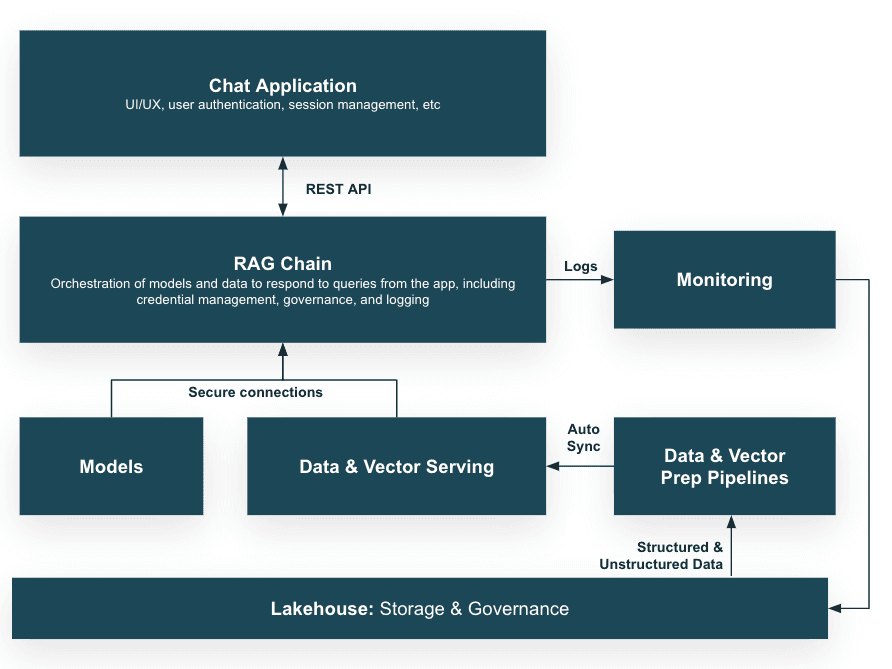
Retrieval-Augmented Generation (RAG): This approach keeps the core LLM (like GPT-4, Claude, or Gemini) static. At inference time, a user query triggers a retrieval step that searches a connected, external knowledge base (e.g., a vector database of company documents, product specs, or customer service logs). The most relevant retrieved documents are then passed to the LLM as context alongside the original query, enabling it to generate an accurate, grounded response. RAG's primary costs are in infrastructure (embedding models, vector databases, retrieval pipelines) and ongoing data management.
Fine-Tuning: This process involves taking a pre-trained LLM and continuing its training on a specific, curated dataset to adjust its internal weights. The goal is to specialize the model's behavior—teaching it a new style, format, or deep domain expertise. This is computationally expensive, requires significant time for data preparation and training runs, and results in a new, standalone model version that must be managed and deployed.
The emerging consensus from the source material is that for the common enterprise use case of providing a model with access to private, up-to-date information, RAG offers a faster, more transparent, and more easily updated path to production. Fine-tuning remains crucial for altering fundamental model behavior or style but is seen as overkill for simple knowledge grounding.
Retail & Luxury Implications
For retail and luxury AI leaders, this trend is highly applicable and validates many current proof-of-concept efforts. The decision between RAG and fine-tuning directly impacts the ROI and scalability of AI initiatives.
Where RAG Excels in Retail:
- Dynamic Product Knowledge Bases: A RAG system can be connected to your PIM (Product Information Management) system, style guides, material sustainability reports, and inventory databases. A customer service agent or chatbot can ask, "What are the care instructions for this limited-edition cashmere blend?" and receive an answer synthesized from the latest technical documents.
- Personalized Clienteling: By retrieving a client's purchase history, preferences, and past interactions from a CRM, a RAG-powered assistant can help a sales associate provide highly personalized recommendations during an in-store or virtual appointment.
- Internal Process Optimization: Connecting an LLM to HR manuals, supply chain reports, or retail operation protocols via RAG allows employees to query complex procedures in natural language.
The advantage here is agility. A new collection launches, a sustainability standard changes, or a logistics process is updated—you simply update the documents in the RAG knowledge base. The core LLM remains unchanged and immediately leverages the new data. There is no need for a costly and time-consuming re-fine-tuning cycle.
Where Fine-Tuning Still Has a Role:
Fine-tuning is the tool of choice when you need to change the model's voice or analytical framework. For a luxury brand, this might involve:
- Tuning a model to emulate the brand's distinctive tone of voice in marketing copy, ensuring consistency across all generated content.
- Specializing a model on high-fashion trend analysis, teaching it to interpret runway reports and street style photos with a critic's eye.
- Creating a model that reasons specifically about luxury valuation, heritage, and craftsmanship in its responses.
In summary, the industry trend suggests starting with RAG for knowledge-intensive applications and reserving fine-tuning for stylistic or deep behavioral specialization. The most sophisticated systems may eventually employ a hybrid approach, but RAG is proving to be the foundational, lower-friction entry point for production.