Gigabyte Technology unveiled a desktop PC armed with the Nvidia GB300 Grace Blackwell Ultra Desktop Superchip, per a media report cited by @dnystedt. The data-center-in-a-box claims to support 400 concurrent AI users.
Key facts
- Gigabyte unveiled GB300 Grace Blackwell Ultra Desktop PC
- Claims 400 concurrent AI users per system
- Positioned as data-center-in-a-box for on-prem AI
- First major OEM integration of Ultra Desktop Superchip
- Pricing and memory capacity not disclosed
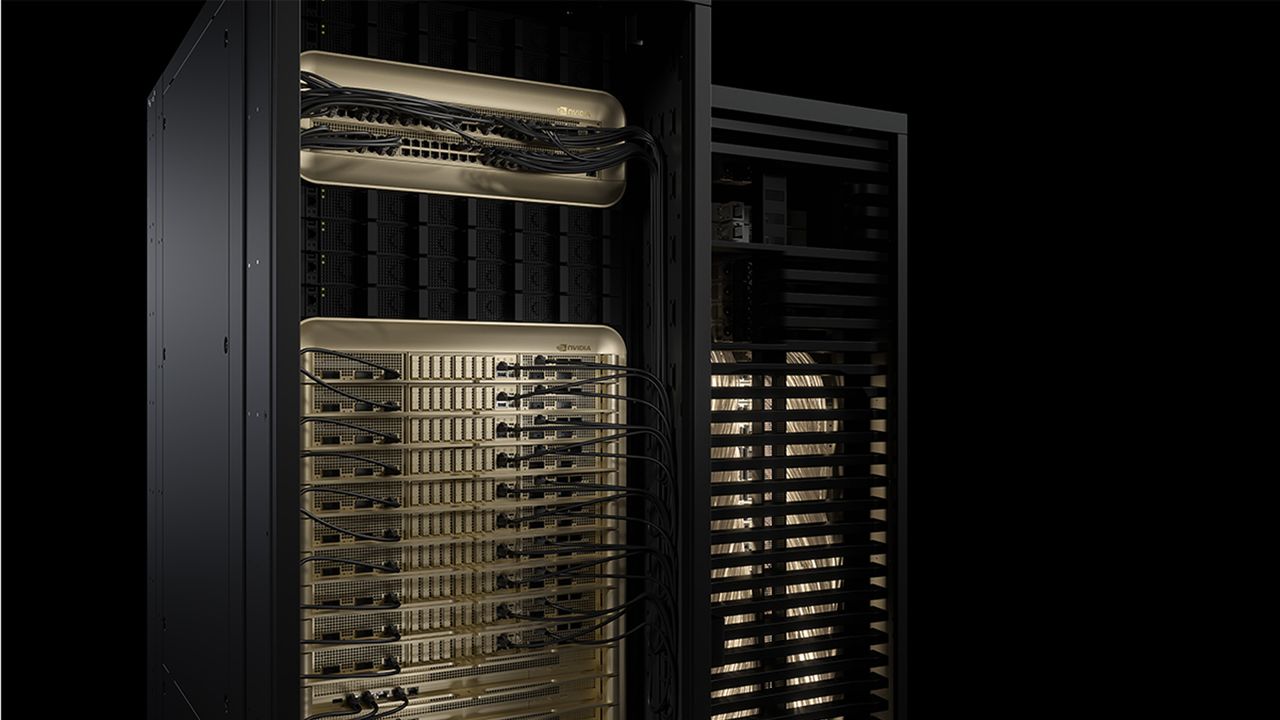
Gigabyte Technology has taken the wraps off a desktop PC built around Nvidia's GB300 Grace Blackwell Ultra Desktop Superchip, according to a media report cited by @dnystedt. The machine is positioned as a "data-center-in-a-box," bringing data-center-grade AI compute to a desk-sized form factor.
The headline claim: the system can support 400 people asking questions simultaneously. That concurrency figure suggests the GB300 Ultra is not aimed at single-user inference but at small team deployments — an on-premises alternative to cloud API calls for organizations that want model weights and prompts to stay inside the building.
Key Takeaways
- Gigabyte unveiled a desktop PC with Nvidia's GB300 Grace Blackwell Ultra Superchip, claiming 400 concurrent AI users.
- The data-center-in-a-box targets on-prem enterprise inference.
Desktop vs. rack: where the GB300 Ultra fits
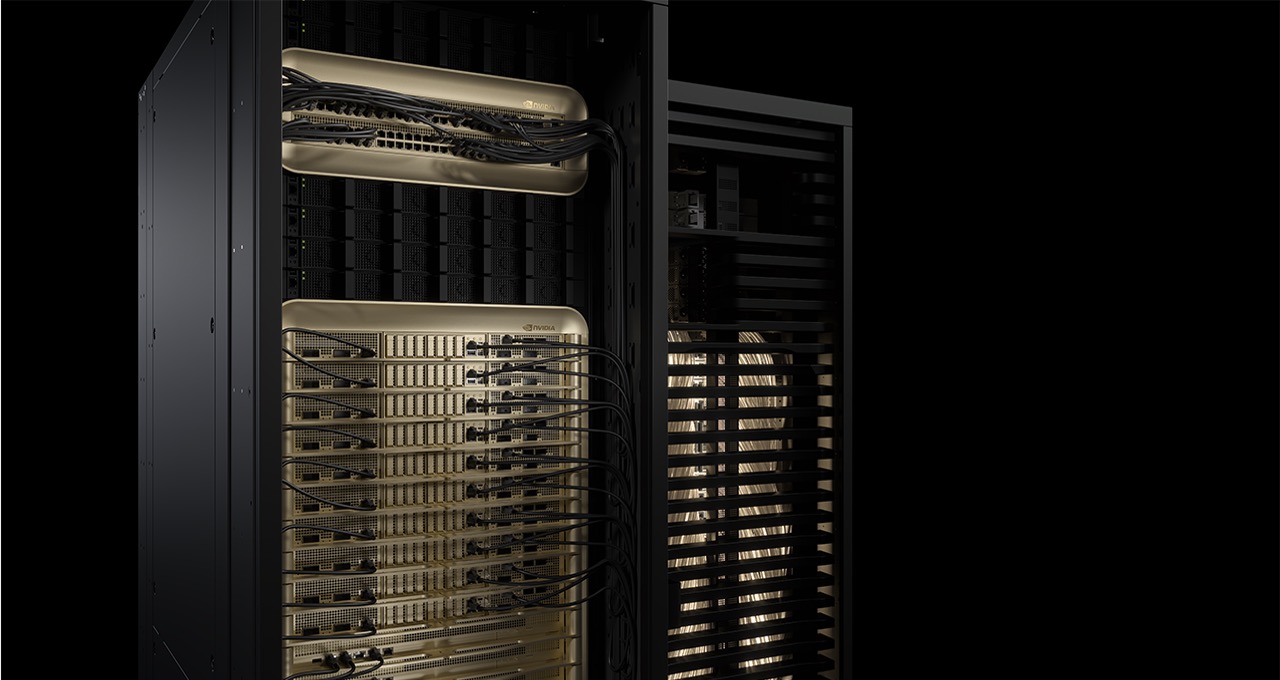
The GB300 Ultra is the desktop variant of Nvidia's Grace Blackwell Ultra platform. The rack-scale GB300 NVL72 pairs 72 GPUs with 36 Grace CPUs, while the Ultra Desktop Superchip packages a single GPU with a Grace CPU in a workstation chassis. Gigabyte's announcement is one of the first public OEM integrations of the Ultra Desktop part, which Nvidia has been seeding to workstation vendors through 2025.
The 400-user concurrency figure is the differentiator. Typical desktop AI workstations — even those with 48GB or 96GB GPUs — are tuned for single-developer inference or fine-tuning. A 400-seat concurrency target implies the GB300 Ultra carries enough memory bandwidth and GPU compute to serve a small enterprise team, effectively replacing a small GPU server rack with one tower.
Gigabyte did not disclose pricing, memory capacity, or the specific media outlet behind the report. The company also did not state which software stack the concurrency claim was measured against — a meaningful omission, since 400 concurrent users on a single GPU is aggressive and likely assumes a small model, heavy caching, or a batched serving framework like vLLM or TensorRT-LLM.
Why this matters more than a workstation refresh
The structural signal here is the desktop form factor absorbing workloads that previously required a rack. If the GB300 Ultra Desktop genuinely sustains 400 concurrent inference sessions, it undercuts the economic case for small GPU clusters in enterprise AI. A single desktop unit replacing a 4-8 GPU server changes power, cooling, and floor-space math for IT departments.
It also extends a pattern Nvidia has been pushing: bring the data center to the desk. The DGX Spark, announced at GTC 2025, was the first consumer-adjacent Grace Blackwell device. The GB300 Ultra Desktop is the next step up — a machine that competes with entry-level DGX systems rather than with laptops.
The open question is software. Nvidia's concurrency claims for desktop parts have historically been optimistic, and 400 simultaneous users on a single GPU will depend heavily on model size, quantization, and request batching. Until an independent benchmark — not a vendor press cycle — validates the number, treat it as a target, not a measurement.
What to watch
Watch for Nvidia's GTC 2026 keynote and the first independent benchmarks of the GB300 Ultra Desktop. If third-party testing confirms 400-user concurrency on a single tower, expect enterprise IT departments to start canceling small GPU server orders. If it lands closer to 50-100 users, the machine is still notable — just a workstation, not a data-center replacement.