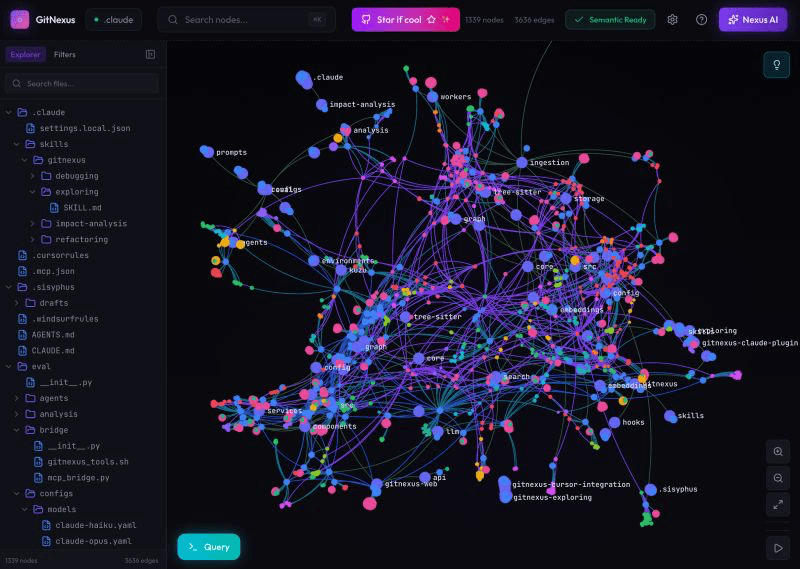
A new open-source tool called GitNexus is attempting to solve a fundamental problem with AI-powered coding assistants: their lack of architectural awareness. When an AI agent edits a function, it typically doesn't know what other parts of the codebase depend on that function's behavior, leading to breaking changes that slip through. GitNexus addresses this by building a comprehensive knowledge graph of an entire codebase, then making that graph available to AI coding tools through the Model Context Protocol (MCP).
What GitNexus Does
GitNexus is not a documentation generator or simple code search tool. According to the announcement, it's a "full code intelligence layer" that performs several autonomous operations:
- AST-based indexing: Uses Tree-sitter to parse the entire codebase into an abstract syntax tree
- Dependency mapping: Tracks every function call, import statement, class inheritance relationship, and interface implementation
- Code clustering: Groups related code into functional clusters with cohesion scores
- Execution flow tracing: Follows call chains from entry points through complete execution paths
- Impact analysis: Runs "blast radius" analysis before code changes and detects which processes break when specific functions are modified
- Coordinated refactoring: Renames symbols across multiple files in a single operation
- Documentation generation: Creates a full codebase wiki from the knowledge graph
The core value proposition is pre-computation. Instead of an AI assistant needing to analyze dependencies on-the-fly (which can be incomplete or slow), GitNexus builds the complete dependency structure at index time. When Claude Code or another tool asks "what depends on this function?", it gets a complete answer in one query.
Technical Implementation and Integration
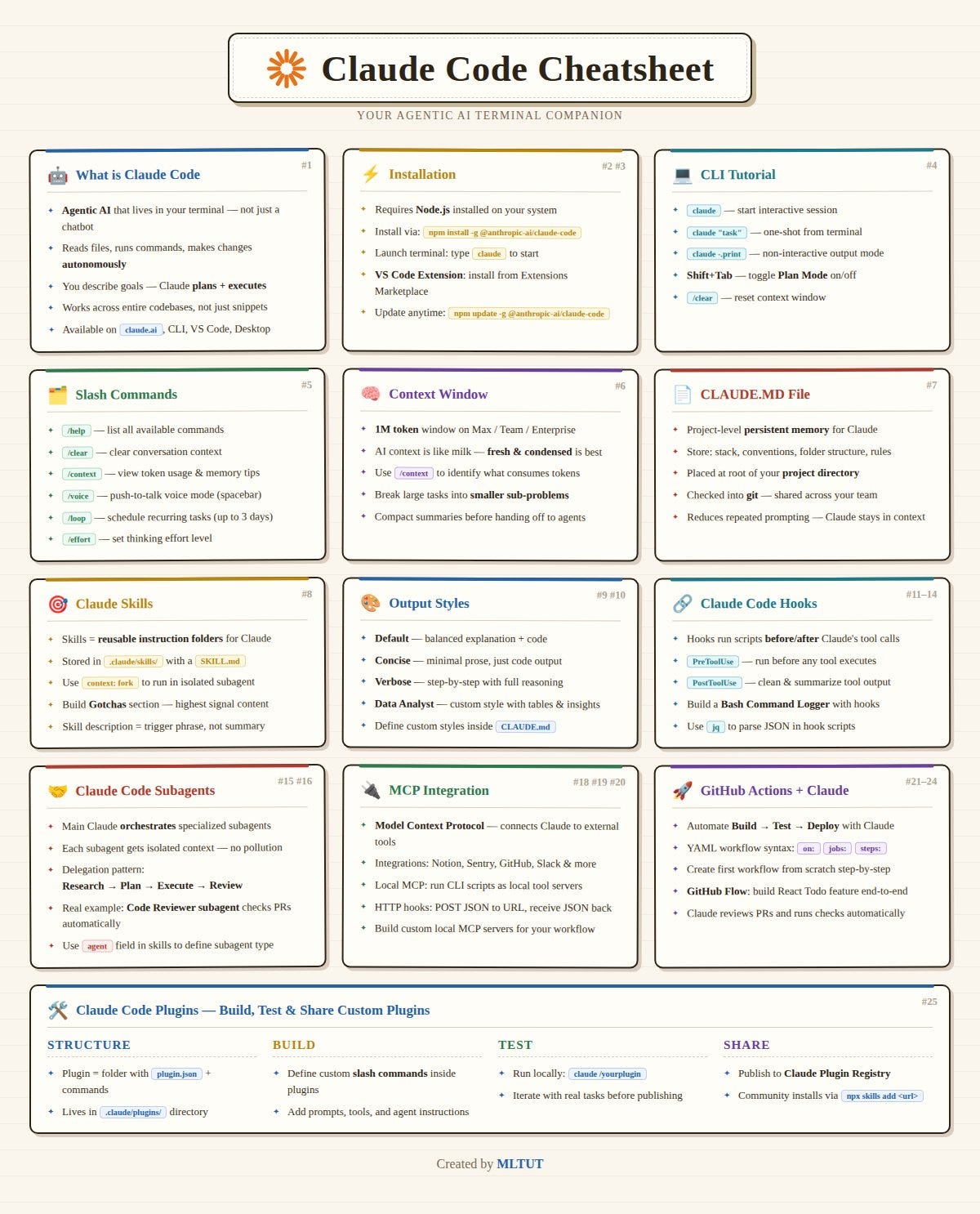
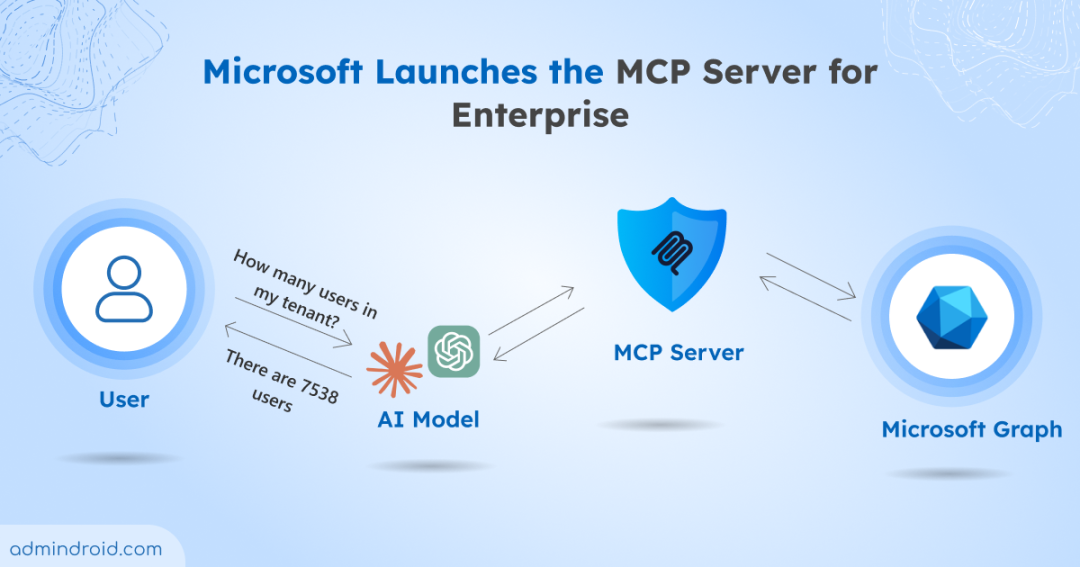
GitNexus integrates with popular AI coding environments through the Model Context Protocol (MCP), which has emerged as a standard for connecting tools to AI assistants. The tool specifically mentions compatibility with:
- Claude Code (Anthropic's coding-focused assistant)
- Cursor (the AI-native IDE)
- Windsurf (another AI-powered development environment)
Setup appears deliberately simple: npx gitnexus analyze initiates the analysis, and MCP registration happens automatically. The tool then makes the knowledge graph available to connected AI assistants.
This architecture means that even smaller, less capable models (like GPT-4o-mini) can avoid breaking call chains because they have access to pre-computed dependency information that would normally require deeper reasoning capabilities.
Current Traction and Availability
According to the announcement, GitNexus has already gained significant traction:
- 9.4K GitHub stars
- 1.2K forks
- Trending on GitHub
- 100% open source
The rapid adoption suggests this addresses a pain point many developers are experiencing as they integrate AI assistants into their workflows.
Key Numbers at a Glance
GitHub Stars 9.4K Forks 1.2K Setup Commandnpx gitnexus analyze
Integration
MCP (Model Context Protocol)
Supported Environments
Claude Code, Cursor, Windsurf
License
Open Source
How This Changes AI-Assisted Development
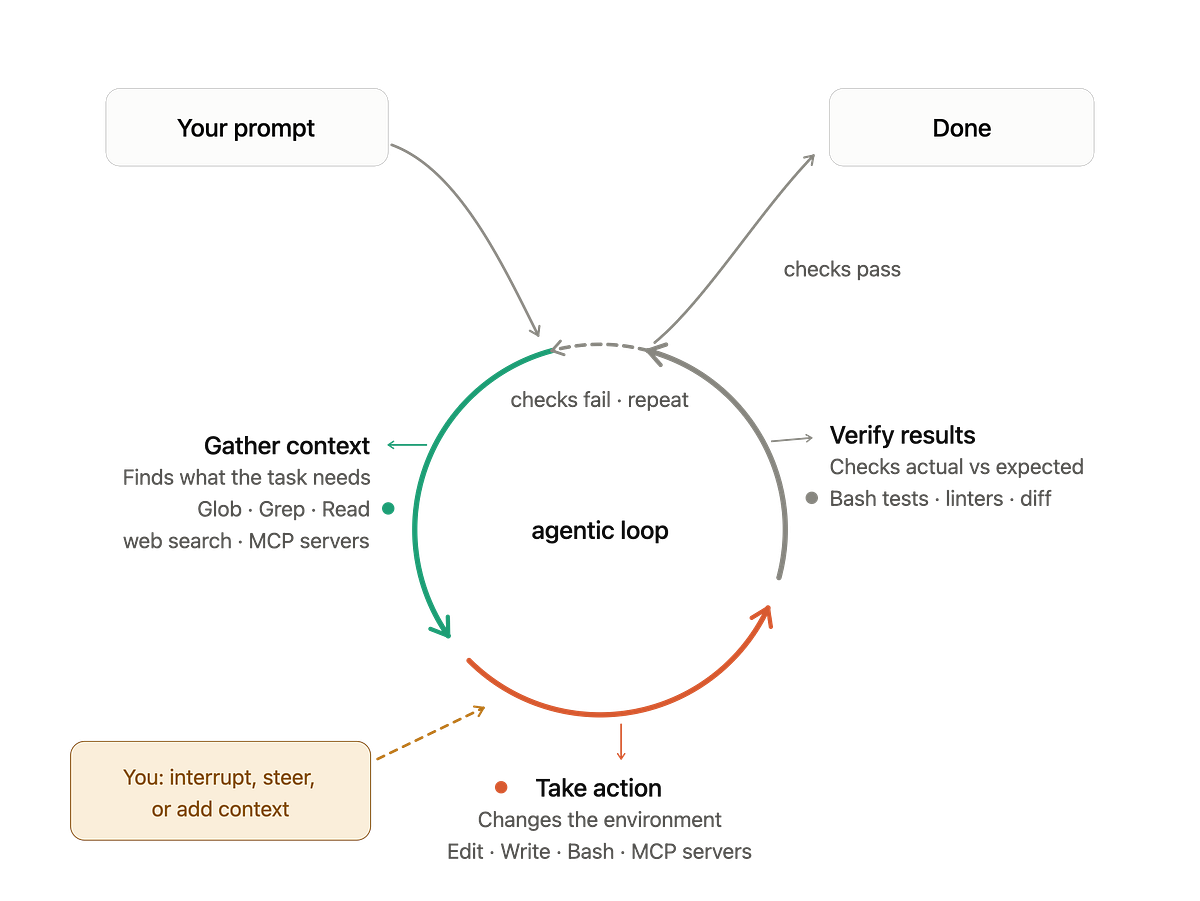
The fundamental shift GitNexus enables is moving from reactive to proactive dependency awareness. Currently, most AI coding assistants operate like this:
- Developer asks to modify a function
- Assistant analyzes the immediate context
- Assistant makes changes
- Breaking changes may occur because dependencies weren't fully understood
With GitNexus, the process becomes:
- Entire codebase is pre-analyzed into a knowledge graph
- Developer asks to modify a function
- Assistant queries the knowledge graph for all dependencies
- Assistant makes changes with full awareness of impact
- Assistant can even suggest updating dependent code
This is particularly valuable for large codebases where manual dependency tracking is impractical and where AI assistants frequently introduce subtle breaking changes.
Limitations and Considerations
While promising, several questions remain unanswered in the initial announcement:
- Performance characteristics: How long does initial indexing take for large codebases?
- Incremental updates: How does the system handle code changes without full re-indexing?
- Language support: Which programming languages are supported through Tree-sitter?
- False positives/negatives: How accurate is the dependency detection?
- Integration depth: Does the MCP integration provide read-only access, or can it also trigger refactoring operations?
Early adopters will need to evaluate whether the dependency mapping is sufficiently accurate to trust for critical refactoring operations.
gentic.news Analysis
GitNexus represents a natural evolution in the AI-assisted development toolchain. This follows Anthropic's November 2025 release of Claude Code, which specifically targeted developer workflows with enhanced code understanding capabilities. The rapid adoption of GitNexus (9.4K stars shortly after release) indicates strong market demand for tools that mitigate the risks of AI-generated code changes.
This development aligns with the broader trend of specialized tools emerging to address AI's limitations in specific domains. Just as retrieval-augmented generation (RAG) systems emerged to ground LLMs in factual knowledge, tools like GitNexus are emerging to ground coding assistants in architectural knowledge. The use of MCP for integration is particularly strategic—it positions GitNexus as a platform-agnostic solution that can work with any MCP-compatible assistant, avoiding vendor lock-in.
From a competitive landscape perspective, GitNexus enters a space where companies like Sourcegraph have offered code intelligence for years, but primarily for human developers. GitNexus's innovation is specifically optimizing for AI agent consumption. If successful, this could pressure existing code intelligence platforms to add similar AI-focused features or risk being bypassed by simpler, more targeted solutions.
The timing is significant. As AI coding assistants move from novelty to production tools, organizations are becoming more concerned about reliability and maintainability. Tools that reduce the "breakage rate" of AI-generated code will see strong adoption, especially if they're open source and easily integrated into existing workflows.
Frequently Asked Questions
What programming languages does GitNexus support?
GitNexus uses Tree-sitter for AST parsing, which supports dozens of programming languages including JavaScript, TypeScript, Python, Java, Go, Rust, and C++. However, the announcement doesn't specify which languages have been tested or optimized for the dependency mapping features. Users should check the GitHub repository for the latest language support information.
How does GitNexus differ from traditional static analysis tools?
Traditional static analysis tools typically focus on finding bugs, security vulnerabilities, or code style issues. GitNexus is specifically designed to build a queryable knowledge graph for AI assistants. While there's overlap in the underlying analysis, the output format and integration method (MCP for AI tools) are fundamentally different from traditional static analysis outputs aimed at human developers.
Can GitNexus work with locally-run AI models?
Yes, since GitNexus uses the Model Context Protocol (MCP), it should work with any AI assistant that supports MCP connections, including locally-run models. The protocol is designed to be model-agnostic, so whether you're using Claude through an API, a local Llama instance, or another model, if it supports MCP, it can connect to GitNexus.
Is GitNexus suitable for enterprise codebases with millions of lines of code?
The announcement doesn't provide specific scalability data, but the use of Tree-sitter (which is quite efficient) and the focus on pre-computation suggests it should handle large codebases. However, initial indexing time and memory usage for massive repositories could be a concern. Early enterprise adopters will need to test with their specific codebase sizes and complexity.