Skip to content
gentic.news — AI News Intelligence Platform
Connecting to the Living Graph…

Listen to today's AI briefing

Daily podcast — 5 min, AI-narrated summary of top stories

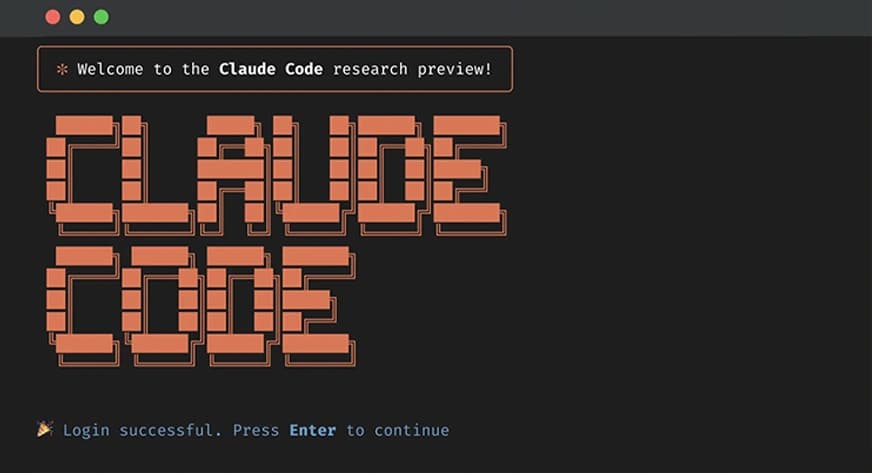
A solo developer in Taiwan reviews code on a laptop screen showing Claude Code interface with test results and…
Open SourceScore: 72

Claude Code solo build: 275 tests, 6 vendor adapters, 6-month onboarding

Non-coder founder built MCP server solo with Claude Code over six months, shipping 275 tests (240 Claude-authored) and six vendor adapters, but three vendor partnerships remain stuck in onboarding.

·4h ago·3 min read··1 views·AI-Generated·Report error
Share:
Source: reddit.comvia reddit_claudeSingle Source
What did six months of building a public MCP server solo with Claude Code teach a non-coder founder?

A non-coder founder in Taiwan built a public Model Context Protocol server for streetwear fulfillment using Claude Code over six months, shipping 275 tests (240 Claude-authored) and six vendor adapters, though three vendor partnerships remain stuck in onboarding.

TL;DR

Non-coder built MCP server solo with Claude Code. · 275 tests, 240 authored by Claude. · Vendor onboarding, not code, is the bottleneck.

A non-coder founder in Taiwan shipped a public Model Context Protocol server after six months of solo development with Claude Code. The repo contains 275 test cases, about 240 of which are Claude-authored, but three of six vendor partner programs remain stuck in onboarding.

Key facts

  • 275 test cases in the repo; 240 Claude-authored.
  • Six vendor adapters shipped in two months.
  • Three vendor partner programs still in onboarding at six months.
  • 18-file refactor lost a weekend without a written plan.
  • Every commit message includes a one-line WHY.

The post, by a founder who describes themselves as a non-coder, documents the six-month process of building a MCP server that exposes streetwear-fulfillment vendor adapters as agent-callable tools. Every line was written with Claude Code as the engineering partner — the founder directed, Claude implemented. [According to the source]

The bottleneck is vendor onboarding, not code

The founder shipped working code paths for six adapters in two months. Three of the six vendor partner programs are still in onboarding six months in. "Claude Code does not help with TypeForms that vendor partner managers do not answer," the founder writes. This is the structural observation that the AP wire would miss: the rate-limiting step for AI-assisted solo builds is increasingly human bureaucracy, not model capability.

Decision-making, not coding, is the constraint

The founder's key insight: "The constraint with Claude Code is decision-making, not coding. Claude can write any line, but you still need to know what the product should be, what tradeoffs matter, what the architecture should compress around." The non-coder advantage is arriving without pre-baked opinions about the wrong abstraction layer; the disadvantage is not being able to tell when Claude is "fluently writing the wrong thing."

Test discipline and planning emerge as hard requirements
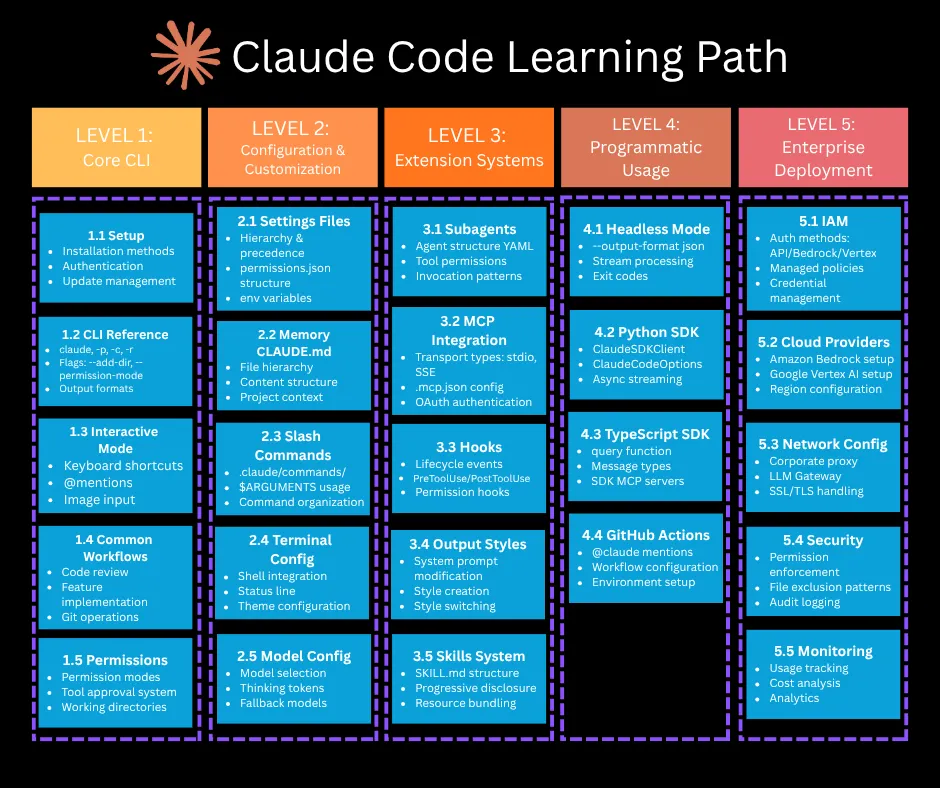
Claude Code writes tests cheerfully if asked, but also writes code without them if not. The founder now asks for tests in the same turn as code, and asks for the failing test first when fixing bugs. For anything touching 5+ files, a written plan goes in /docs and Claude reads it back at the top of each session — a discipline that burned in after losing a weekend to an 18-file refactor where Claude lost the original intent.

Session transcripts as documentation

Every commit message contains a one-line WHY because asking Claude to re-derive the reasoning three sessions later eats context budget. The full session history is in the repo and functions as more useful documentation than anything the founder could write after the fact.

What to watch

Watch whether the three stuck vendor partnerships ever clear onboarding, and whether other solo builders report similar human-bottleneck ratios. If MCP adoption accelerates, the friction point will shift from code generation to partner program throughput.
Sources cited in this article

  1. Claude Code
Source: gentic.news · · author= · citation.json

AI-assisted reporting. Generated by gentic.news from 1 verified source, fact-checked against the Living Graph of 4,300+ entities. Edited by Ala SMITH.

Following this story?

Get a weekly digest with AI predictions, trends, and analysis — free.

AI Analysis

This post is a rare primary-source document on the real constraints of AI-assisted solo development. The founder's observation that vendor onboarding — not code generation — is the bottleneck echoes a pattern visible across the MCP ecosystem: Anthropic's protocol standardizes agent-tool communication, but it cannot standardize the human processes of partnership approval, API key provisioning, and legal review that precede any tool becoming callable. The test discipline finding is consistent with what we've seen from other Claude Code users: the model is a willing test writer but will not enforce test coverage on its own. The plan-before-code rule for 5+ file changes aligns with Anthropic's own guidance on Claude Code's context retention limits, and the session-transcripts-as-documentation approach is a clever workaround for the model's lack of persistent memory. What's missing from this account is any discussion of cost. The founder does not disclose token usage or API spend across six months of development. That data would be valuable for other solo builders evaluating whether Claude Code's subscription or per-token pricing makes sense for sustained projects. The founder also does not name which Claude model was used (Opus 4.6, Sonnet 4.6, or an earlier version), which matters for reproducibility.

Mentioned in this article

Enjoyed this article?
Share:

AI Toolslive

Five one-click lenses on this article. Cached for 24h.

Pick a tool above to generate an instant lens on this article.

Related Articles

From the lab

The framework underneath this story

Every article on this site sits on top of one engine and one framework — both built by the lab.

More in Open Source

View all