Agent-Infra's new MCP server, @agent-infra/mcp-server-lead-enrichment, uses Zod-enforced schemas to eliminate LLM parameter hallucinations in B2B sales agents. The tool targets Claude and Cursor workflows with strict JSON-RPC responses and risk-free metered billing.
Key facts
- Zod-validated tools: enrich_lead and get_company_intent
- Billing threshold: Confidence Score > 0.6
- Sample confidence score: 0.98 for Stripe, Inc.
- Native support: Claude Desktop, Cursor, VS Code Copilot
- MCP introduced by Anthropic in November 2024
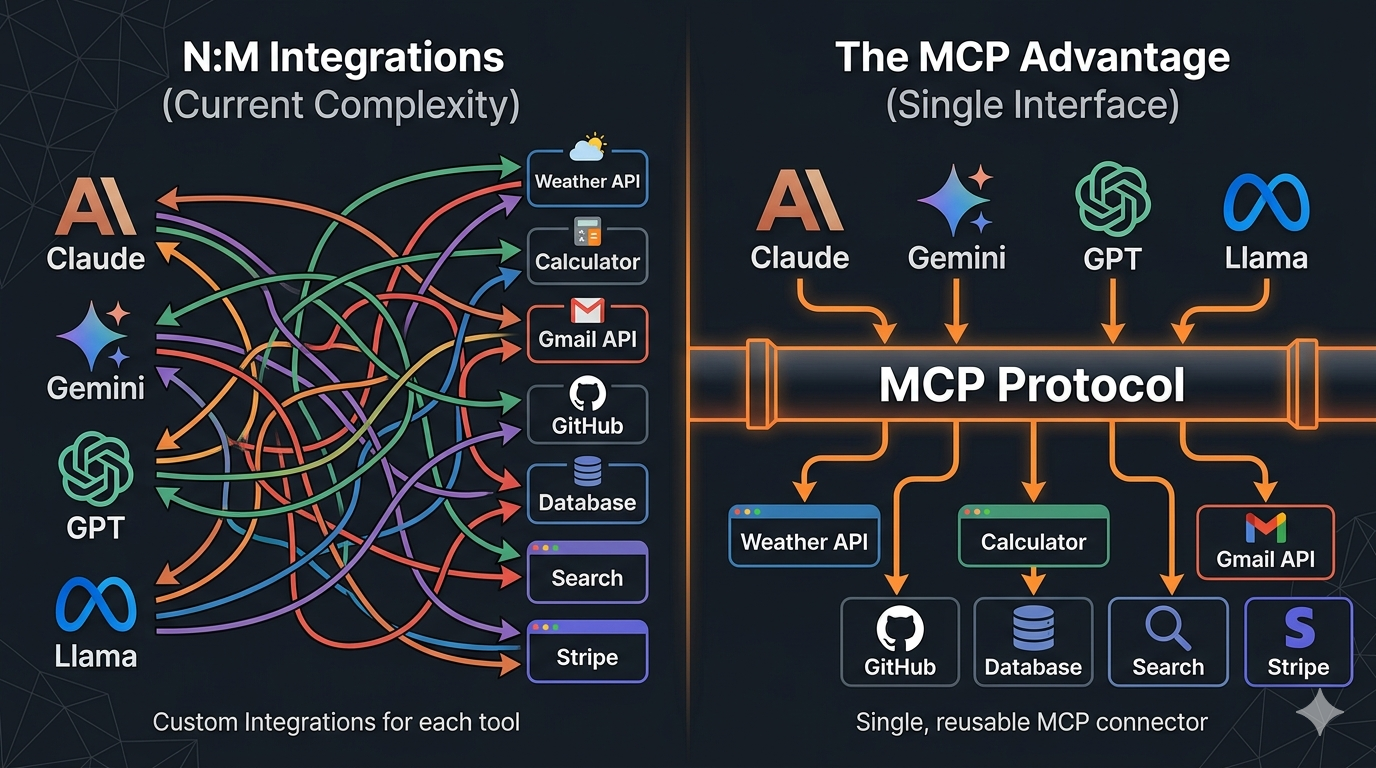
The Model Context Protocol (MCP), introduced by Anthropic in November 2024, standardizes how LLMs call external tools. Agent-Infra's new B2B Lead Enrichment MCP server applies that standard to a specific failure mode: hallucinated parameters when retrieving firmographic data.
Every tool, such as enrich_lead or get_company_intent, uses strict Zod annotations. This forces the LLM to adhere to specific string formats and enum values, significantly reducing the probability of malformed search parameters or hallucinated API arguments. The approach directly addresses the "garbage-in, garbage-out" problem that plagues autonomous SDR swarms scraping thousands of leads.
How the JSON-RPC contract works
When the LLM invokes enrich_lead with a domain like stripe.com, the server returns a structured JSON-RPC object with company name, industry, technographics, intent signals, and a confidence score. The sample response shows a 0.98 confidence score for Stripe, Inc., with intent signals including "Increased engineering headcount in EMEA" and "New office opened in Dublin."
This structured output is designed for immediate consumption by the agent's context window. Rather than parsing free-text responses, the agent receives typed data it can directly inject into outreach sequences. The protocol's native integration with Claude Desktop, Cursor, and VS Code Copilot means no custom adapter logic is required.
The billing model is the differentiator
The risk-free metered billing structure is what separates this from traditional data providers. Your account is only debited for successful enrichments that return a Confidence Score > 0.6. If the server cannot find high-quality data or the confidence score falls below the threshold, the query cost is $0.
This allows for the deployment of autonomous SDR swarms that can scrape and filter thousands of leads without the risk of paying for "Not Found" results or low-fidelity hallucinations. Traditional data providers demand massive upfront credits; this model shifts the risk to the provider.
Contextual grounding vs. static training data
By providing the LLM with a live toolset rather than static training data, the agent can ground its outreach sequences in current events rather than outdated 2023 information. This is a meaningful improvement over retrieval-augmented generation approaches that rely on pre-indexed corpora, since the MCP tool fetches real-time signals like funding rounds and job openings.
The source does not disclose pricing tiers, API rate limits, or the underlying data provider. Those details would determine whether this scales beyond a demo. The confidence score threshold of 0.6 is also an arbitrary line — the source does not explain how that number was chosen or what precision it yields in practice.
What to watch
Watch for Agent-Infra to publish benchmark data on hallucination rates with and without Zod validation — the source claims reduced malformed parameters but provides no quantitative before/after. Also track whether the $0-billing-below-0.6 model survives high-volume autonomous SDR usage without raising prices.
Source: dev.to
[Updated 23 Aug via devto_mcp]
The new source reveals a free tier: an ENRICHMENT_API_KEY with value YOUR_FREE_API_KEY in the config, implying no-cost access for developers [per dev.to]. It also specifies the endpoint URL https://lead-enrichment-mcp.agent-infra.workers.dev/mcp and adds a "Propensity to Buy" intent score, alongside a sample response showing Acme Corp with 1,250 employees and a tech stack including Salesforce, AWS, HubSpot, and Segment.