What Happened
A new research paper, "Demand Acceptance using Reinforcement Learning for Dynamic Vehicle Routing Problem with Emission Quota," was posted to the arXiv preprint server on February 27, 2026. The work introduces and formalizes a novel operational challenge: the Dynamic and Stochastic Vehicle Routing Problem with Emission Quota (DS-QVRP-RR).
This problem extends classic logistics planning by integrating three complex, real-world constraints:
- Dynamic & Stochastic Demand: Customer delivery requests arrive in real-time, with uncertain attributes (e.g., location, size).
- Global Emission Quota: The entire fleet's operations are bound by a hard cap on total emissions (e.g., CO₂), reflecting regulatory or corporate sustainability targets.
- Demand Acceptance/Rejection: The system must decide in real-time whether to accept a new request or reject it, as accepting everything could violate the emission quota.
The core innovation is a two-layer optimization framework. The high-level layer uses Reinforcement Learning (RL) to learn a policy for anticipatory demand rejection. It doesn't just react to the quota; it learns to reject some demands proactively to preserve emission budget for potentially more valuable future requests. The low-level layer handles the combinatorial optimization of actual vehicle routing for the accepted demands.
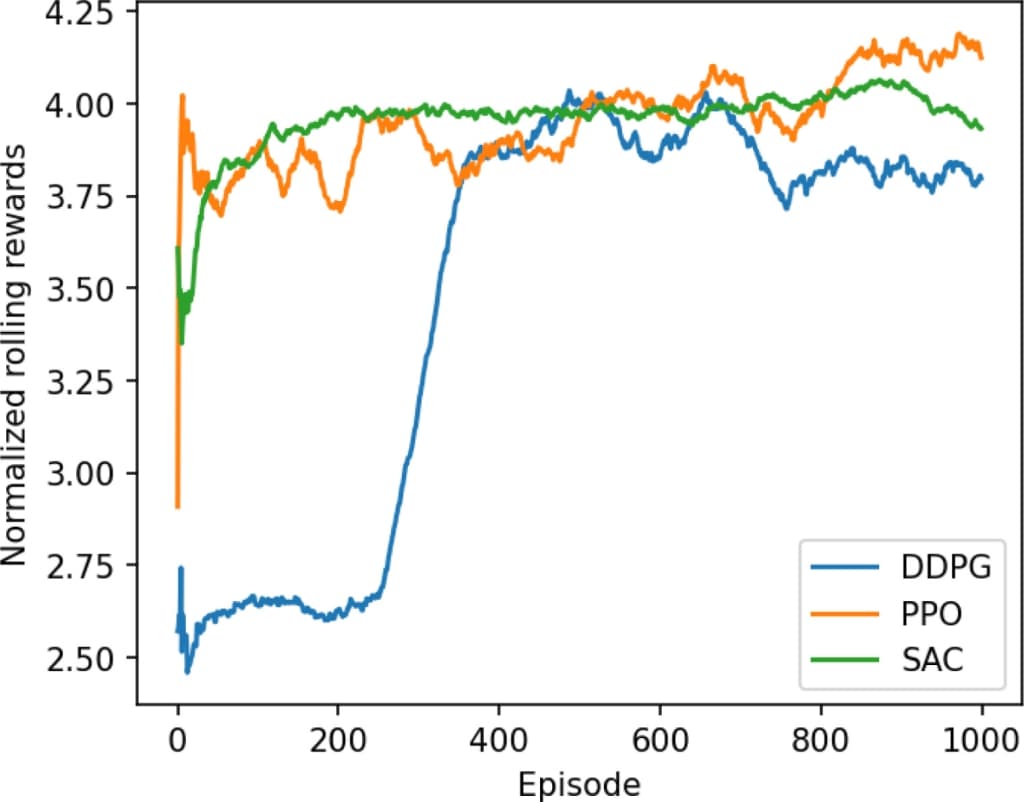
The authors developed hybrid algorithms that marry RL with traditional operations research techniques. Their comprehensive computational study shows this approach outperforms traditional reactive or myopic methods, particularly when the planning horizon is uncertain—a common reality in logistics.
Technical Details
The DS-QVRP-RR is a significant step up in complexity from standard Vehicle Routing Problems (VRPs). The emission quota adds a global, non-decomposable constraint across all vehicles and time, making greedy, per-vehicle optimization ineffective.
The proposed two-layer framework decomposes the problem:
- Layer 1 (Strategic): An RL agent observes the system state (remaining emission budget, fleet positions, accepted orders) and decides whether to accept or reject an incoming demand. The reward function balances immediate revenue from acceptance against the long-term cost of depleting the emission quota prematurely.
- Layer 2 (Tactical): For accepted demands, a combinatorial optimization solver (e.g., a metaheuristic or MILP-based router) generates or updates vehicle routes to minimize cost or distance while respecting vehicle capacity and other standard VRP constraints.
The RL agent's anticipatory capability is key. By learning from simulated or historical operational data, it develops a sense of "value of emission budget," understanding that some demands are worth rejecting now to enable a more profitable set of deliveries later within the fixed environmental cap.
Retail & Luxury Implications
While the paper is framed in general logistics terms, its implications for retail and luxury supply chains are direct and substantial.
1. Sustainable Last-Mile & White-Glove Delivery: Luxury brands offering same-day, next-day, or scheduled in-home delivery face immense pressure to decarbonize. A global group like LVMH or Kering has explicit sustainability targets. Implementing a system like DS-QVRP-RP could allow a brand to:
* Cap daily or weekly emissions for its delivery fleet in a key metro area (e.g., Paris, NYC, Shanghai).
* Intelligently manage high-value client requests. The system could learn to prioritize accepting a delivery for a top client's bespoke item while potentially rejecting a lower-margin, less-time-sensitive standard shipment to stay within the quota.
* Optimize the use of mixed fleets (electric vans, cargo bikes, traditional vehicles) by treating their different emission profiles as part of the global budget.
2. Inventory Rebalancing and Store-to-Store Transfers: Beyond client delivery, internal logistics between boutiques, warehouses, and consignment partners are dynamic. A system that factors in an emission budget for these transfers could help a retail network optimize its carbon footprint while ensuring high-demand items are in the right location.
3. Service Level Agreement (SLA) Management with Green Constraints: For e-commerce platforms owned by luxury groups, this research provides a technical blueprint for offering customers a choice: "You can have this delivered today, but it consumes X units of our carbon budget. Alternatively, for a lower emission impact, we can deliver it tomorrow as part of a consolidated route." The RL framework could manage the trade-offs between different SLA tiers and the overarching emission goal.
The critical insight for luxury is that this isn't just about cost minimization; it's about value-maximization under a sustainability constraint. It provides a sophisticated tool to align operational excellence with environmental stewardship and brand equity.