Sam Altman Frames AI as a Metered Utility, Aims to 'Flood the Market' to Prevent Wealth-Based Access

Sam Altman Frames AI as a Metered Utility, Aims to 'Flood the Market' to Prevent Wealth-Based Access

OpenAI CEO Sam Altman described a future where AI intelligence is a metered utility like electricity. He argues high demand without supply leads to access for the wealthy, so his goal is to 'flood the market' with AI 'tokens'.

1d ago·2 min read·13 views·via @rohanpaul_ai
Share:

What Happened

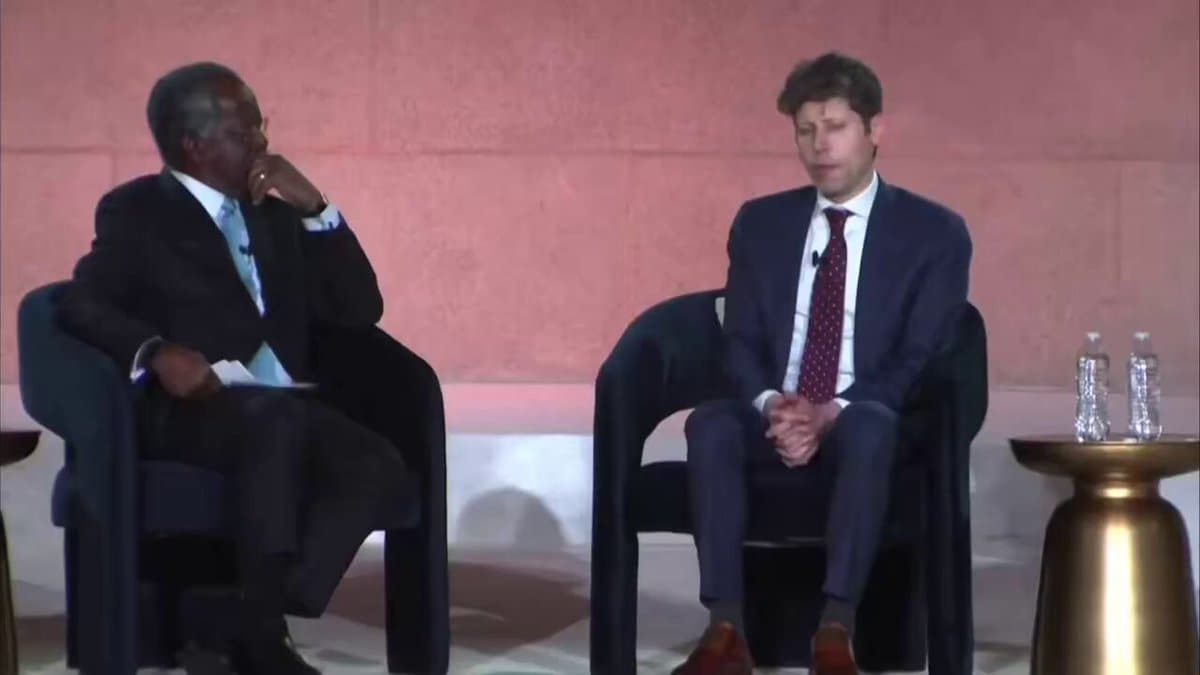
In a statement shared via social media, OpenAI CEO Sam Altman articulated a specific vision for the future of artificial intelligence. He stated: "We see a future where intelligence is a utility, like electricity or water, and people buy it from us on a meter."

The accompanying commentary clarifies Altman's reasoning: he believes that high demand for advanced AI without sufficient supply would lead to a scenario where access is restricted to the wealthy. To prevent this, his stated aim is to "flood the market with tokens." The term "tokens" in this context likely refers to units of AI compute or API access, analogous to the metered utility model.

Context

This statement aligns with Altman's long-standing public philosophy and OpenAI's founding charter, which emphasizes ensuring that artificial general intelligence (AGI) benefits all of humanity. The utility metaphor is not new for Altman; he has previously compared future AI to a "copilot" for every profession and discussed the importance of driving costs down. However, the explicit framing of a metered model and the strategic goal of market saturation to combat inequity provides a clearer lens on OpenAI's intended business and distribution model.

It also comes amid ongoing industry debates about the concentration of AI capability, the environmental and computational costs of large models, and how to manage access to increasingly powerful systems. Altman's comment directly addresses the access inequality concern by proposing volume and commoditization as the solution.
AI Analysis

Altman's utility metaphor is a deliberate reframing with significant technical and business implications. Technically, treating intelligence as a utility implies a focus on reliability, scalability, and standardization of output—key engineering challenges for an API service. It suggests a move away from selling discrete model versions (GPT-4, GPT-5) and toward selling reliable, measurable units of intelligent work, which could reshape how developers architect applications. From a market perspective, the goal to 'flood the market' signals a priority on scaling inference infrastructure and reducing marginal costs to a point where price is not a barrier. This is a competitive strategy aimed at defining the market structure before others can. However, it raises immediate questions about what constitutes a 'token'—is it a measure of compute (FLOPs), input/output tokens, or a more abstract unit of 'intelligence'? The ambiguity of the unit is a critical detail that will define the feasibility of this model. Practitioners should watch for corresponding shifts in OpenAI's API pricing and packaging. A true utility model would likely involve more granular, usage-based pricing and potentially new product offerings designed for constant, high-volume consumption rather than intermittent API calls. The success of this model hinges entirely on achieving unprecedented scale and efficiency in AI inference, making OpenAI's infrastructure investments and energy deals a leading indicator of progress toward this vision.
Original sourcex.com

Trending Now