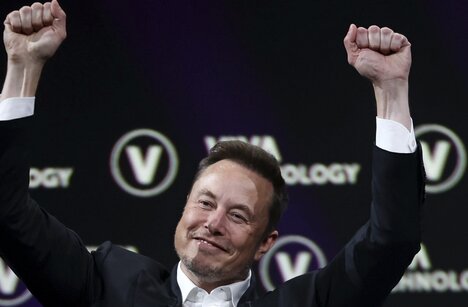
In a recent public appearance, OpenAI CEO Sam Altman articulated a vision for the next phase of artificial intelligence, framing its evolution not as a single monolithic tool but as three distinct, high-impact outcomes. This perspective, distilled from a longer discussion, provides a clear strategic lens for where one of the industry's most influential leaders believes value will be created.
What Altman Said: The Three Outcomes
According to a summary posted by AI commentator Rohan Pandey (@rohanpaul_ai), Altman described the following trajectories:
- AI for Scientific Research: AI systems capable of autonomously conducting or significantly accelerating scientific discovery. This moves beyond literature review to hypothesis generation, experimental design, and data analysis.
- AI for Enterprise Operations Acceleration: AI that "sharply speeds up company operations beyond coding." This suggests a focus on automating and optimizing core business workflows—finance, supply chain, marketing, HR—far surpassing the current automation of software development tasks.
- The Trusted Personal Agent: An AI that can "use his tools, understand his life, act on his behalf, and suggest useful next steps." This is the most anthropomorphic vision: a persistent, context-aware digital entity integrated into daily life, managing tasks, filtering information, and initiating actions with delegated authority.
Context: From ChatGPT to Strategic Vision
This tripartite vision is not a casual observation but a strategic framework from the leader of a company that has repeatedly shifted the industry's center of gravity. It follows OpenAI's established pattern of setting ambitious, concrete goals—from beating humans at Dota 2 to achieving human-level performance on professional benchmarks—and then executing toward them.
The emphasis on scientific research aligns directly with OpenAI's own work, such as its contributions to AI for mathematics and biology, and positions AI as a direct catalyst for fundamental human progress. The focus on enterprise operations expands the addressable market far beyond developer tools (like GitHub Copilot) into the entire global economy's operational backbone. Finally, the personal agent concept is the logical endpoint of the assistant paradigm that ChatGPT popularized, evolving from a conversational tool into an autonomous, proactive partner.
What This Means in Practice
For practitioners and businesses, Altman's outline serves as a roadmap for investment and development.
- Research-focused AI will require deep integration with scientific instrumentation, simulation environments, and domain-specific knowledge graphs, moving from language models to "reasoning and discovery models."
- Operations AI necessitates moving from single-task automation (write an email, summarize a document) to understanding and re-engineering multi-step, cross-departmental business processes.
- The personal agent presents the hardest technical and ethical challenges: maintaining persistent memory, understanding nuanced personal context, making safe decisions with real-world consequences, and establishing unprecedented levels of user trust.
gentic.news Analysis
Altman's vision consolidates several threads we've been tracking. The push for AI in science directly connects to the work of entities like Google DeepMind's AlphaFold 3 and Isomorphic Labs, which are applying AI to biological discovery. His mention of operations acceleration beyond coding is a tacit acknowledgment that the low-hanging fruit of code generation is being harvested, and the next frontier is the broader, more complex realm of general business logic and workflow. This aligns with the surge in enterprise AI platform funding we noted in our 2025 market recap.
Most critically, the trusted personal agent outcome is the most speculative and would represent the deepest integration of AI into society. It implies a level of agency and delegation we have not yet seen in shipped products. This vision contradicts the more cautious, tool-like approach advocated by some industry safety researchers and echoes the more ambitious agentic goals of projects like Meta's open-source efforts and rumors around Google's "Project Astra." It frames the central competition not just on model capability, but on who can build a reliable, secure, and useful platform for persistent AI agency. This follows Altman's previous statements on pursuing Artificial General Intelligence (AGI) and suggests these three outcomes are viewed as stepping stones or manifestations of that goal.
Frequently Asked Questions
What did Sam Altman actually say about AI's future?
In a recent discussion, OpenAI CEO Sam Altman outlined three specific outcomes he sees for AI development: 1) AI that conducts scientific research, 2) AI that drastically accelerates company operations (beyond just coding), and 3) a trusted personal AI agent that can use tools, understand a user's life, act on their behalf, and make suggestions.
How does this relate to current OpenAI products like ChatGPT?
Current products like ChatGPT are primarily conversational tools or coding assistants. Altman's vision describes a significant evolution: from tools that respond to prompts to autonomous systems that conduct research, manage business operations, and act as proactive, persistent personal agents with deep context and delegated authority.
Is anyone building AI for scientific research now?
Yes, this is an active area. Google DeepMind's AlphaFold series for protein structure prediction is a landmark example. Other labs and companies are applying AI to material science, drug discovery, and climate modeling. Altman's statement signals that OpenAI sees this as a major, formal pillar of future development.
What are the biggest challenges for a "trusted personal agent"?
The technical hurdles include maintaining long-term memory, understanding complex personal context, and reliably executing multi-step tasks in the real world. The non-technical challenges are even greater: ensuring security and privacy, establishing legal and ethical frameworks for AI that "acts on your behalf," and building the profound level of user trust required for such delegation.