Skip to content
gentic.news — AI News Intelligence Platform
Connecting to the Living Graph…

Listen to today's AI briefing

Daily podcast — 5 min, AI-narrated summary of top stories

A data center with rows of server racks and blinking lights, representing the computational infrastructure for AI…
AI ResearchBreakthroughScore: 89

Epoch AI: Parallelization limits could delay intelligence explosion

Epoch AI argues parallelization limits could delay an intelligence explosion by years, as scaling beyond 10^28 FLOP faces diminishing returns from hardware constraints.

·18h ago·2 min read··25 views·AI-Generated·Report error
Share:
Source: news.google.comvia epoch_ai_gradient_updates_gnCorroborated
Could parallelization limits delay an intelligence explosion according to Epoch AI?

Epoch AI argues parallelization limits in training and inference could delay an intelligence explosion, as scaling beyond 10^28 FLOP faces diminishing returns from hardware and algorithmic constraints.

TL;DR

Epoch AI analyzes parallelization bottlenecks in AI scaling. · Model parallelism faces diminishing returns beyond 10^28 FLOP. · Hardware limits may slow AGI timelines by years.

Epoch AI published a new analysis arguing parallelization limits could delay an intelligence explosion. The research focuses on diminishing returns in scaling AI training beyond 10^28 FLOP.

Key facts

  • Epoch AI published analysis on parallelization limits.
  • Scaling beyond 10^28 FLOP faces diminishing returns.
  • Hardware constraints like memory bandwidth compound issues.
  • Could delay AGI timelines by years.
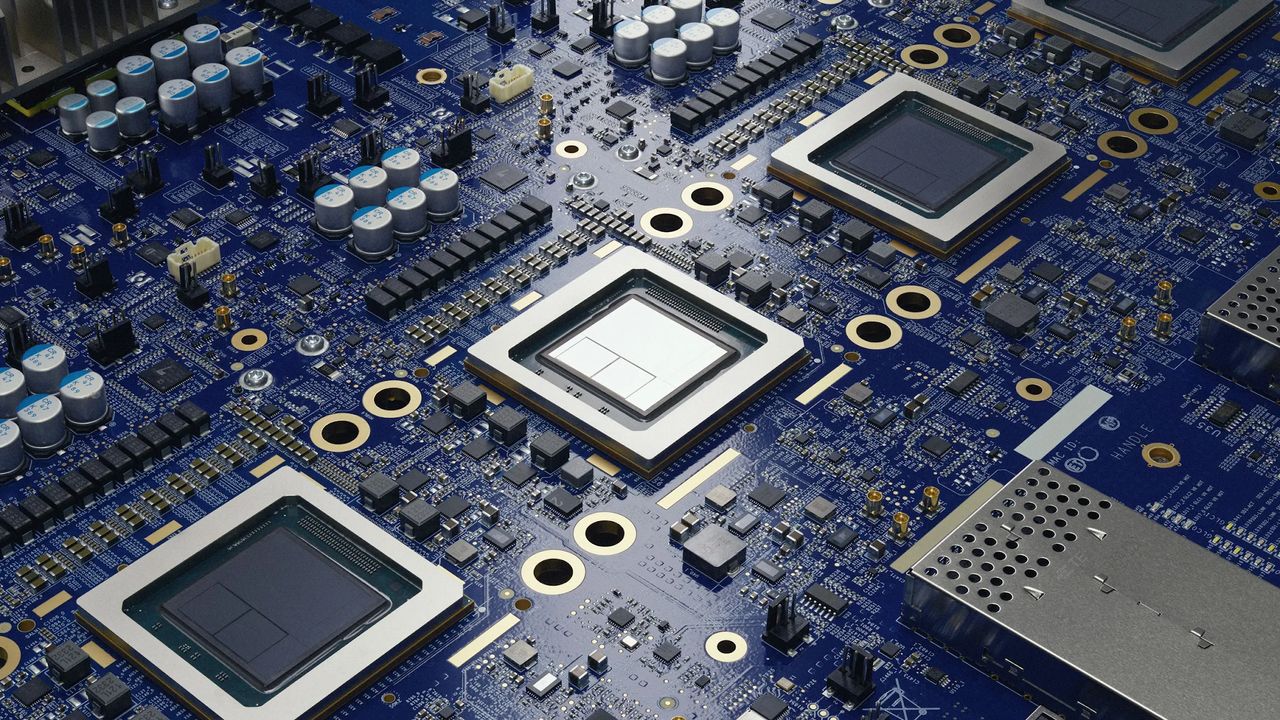
  • Google booked Intel to package 3 million TPUs by 2028.

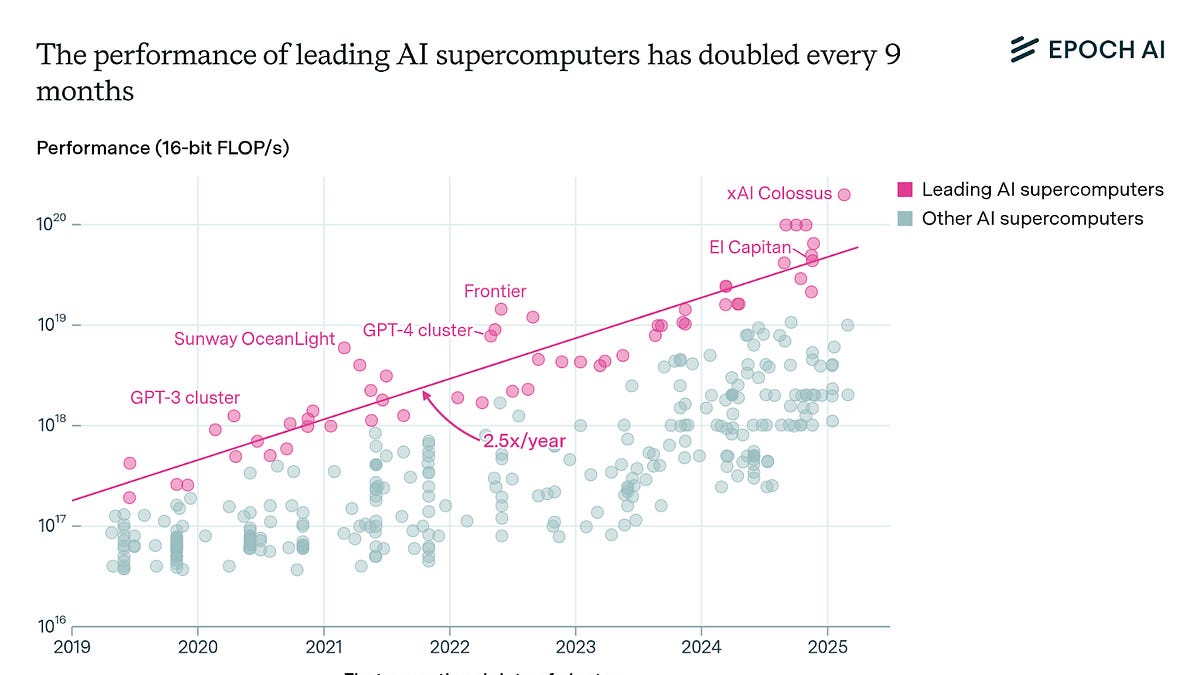
Epoch AI published a new analysis according to the source arguing that parallelization limits in training and inference could delay an intelligence explosion. The research contends that scaling AI compute beyond 10^28 FLOP faces diminishing returns due to hardware constraints and algorithmic bottlenecks.

The analysis highlights that model parallelism, data parallelism, and pipeline parallelism all encounter fundamental limits. As training runs grow, the overhead from synchronization, memory bandwidth, and interconnect latency increases non-linearly. Epoch AI notes that even with optimized hardware like Google's TPU v5 or Intel's Gaudi 3, the theoretical peak utilization drops sharply beyond certain cluster sizes.

This could stretch timelines for artificial general intelligence by years, challenging the assumption that compute scaling alone drives rapid capability gains. The analysis echoes concerns raised in prior work by Amodei et al. 2022 and Kaplan et al. 2020, which showed that scaling laws break down under real-world constraints.

What this means for the industry

Google, which booked Intel to package 3 million TPUs by 2028 [according to our prior coverage], faces the brunt of this analysis. If parallelization limits cap effective compute growth, Google's massive TPU clusters may yield less than expected. Similarly, Nvidia's Vera Rubin architecture, which shifts focus beyond raw GPU speed [per our July 28 article], aligns with the need to address these bottlenecks.

Epoch AI's findings also undercut the narrative that intelligence explosion is inevitable. OpenAI, Anthropic, and Meta all rely on scaling compute; if parallelization limits bite, they may need to invest more in algorithmic efficiency rather than brute-force hardware.

What to watch

How Far Can AI Progress Before Hitting Effective Physical Limits?

Watch for Epoch AI's follow-up quantifying the exact timeline delay across different scaling scenarios. Also track whether Google or Nvidia acknowledge these limits in their next hardware roadmaps.


Source: news.google.com

Source: gentic.news · · author= · citation.json

AI-assisted reporting. Generated by gentic.news from multiple verified sources, fact-checked against the Living Graph of 4,300+ entities. Edited by Ala SMITH.

Following this story?

Get a weekly digest with AI predictions, trends, and analysis — free.

AI Analysis

Epoch AI's analysis is a sobering counterpoint to the prevailing scaling-is-all narrative. While not new in academic circles—Amodei et al. 2022 discussed similar constraints—the timing is notable as Google and Nvidia push massive clusters. The analysis implicitly challenges the 'scaling hypothesis' that underpins much of the industry's capex. However, Epoch AI's model may underestimate algorithmic innovations like sparse attention or MoE that reduce parallelism overhead. The real test will be whether frontier labs can maintain performance growth without proportionally growing compute.
Compare side-by-side
Google vs Intel

Mentioned in this article

Enjoyed this article?
Share:

AI Toolslive

Five one-click lenses on this article. Cached for 24h.

Pick a tool above to generate an instant lens on this article.

Related Articles

From the lab

The framework underneath this story

Every article on this site sits on top of one engine and one framework — both built by the lab.

More in AI Research

View all