Skip to content
gentic.news — AI News Intelligence Platform
Connecting to the Living Graph…

Listen to today's AI briefing

Daily podcast — 5 min, AI-narrated summary of top stories

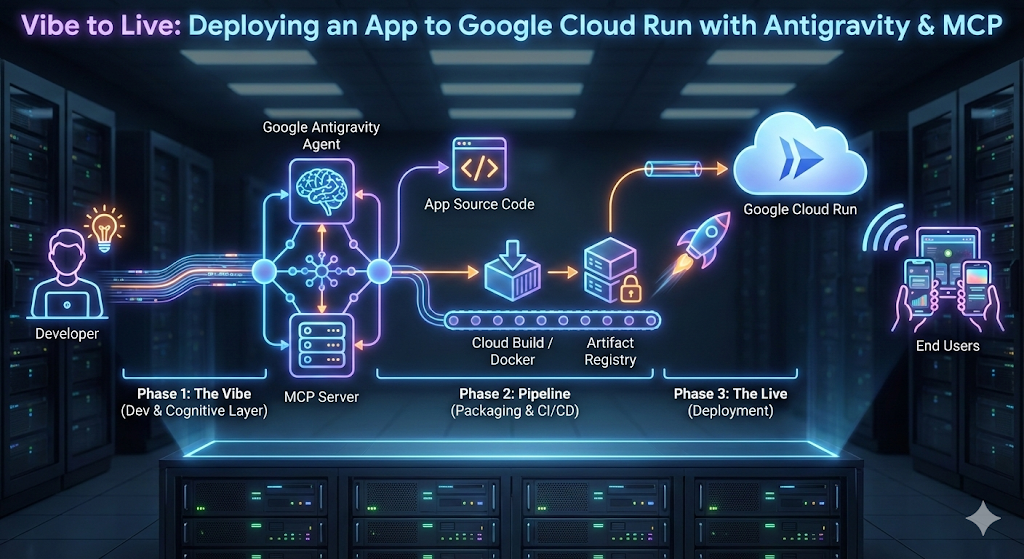
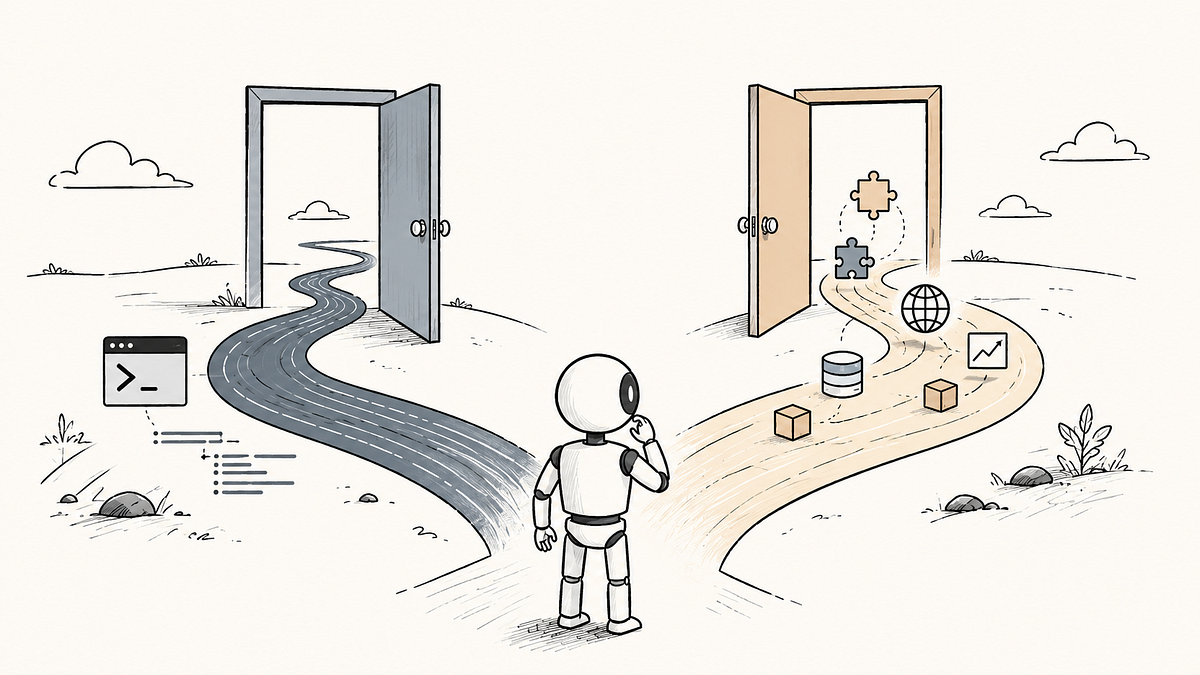
A developer at a laptop examines a diagram comparing default-private MCP tools to raw CDN URLs, with security…

Agent Publish Primitives: Why Default-Private MCP Tools Beat Raw CDN URLs

Thryvate argues AI agents need five design properties for safe web publishing: default-private, revocable, expiring, per-viewer analytics, and idempotent updates. MCP tools enforce policy while the model handles intent.

·3d ago·3 min read··18 views·AI-Generated·Report error
Share:
Source: dev.tovia devto_mcpMulti-Source
What design properties should an AI agent's publish-to-web primitive have?

Thryvate argues AI agents publishing to the web need five design properties: default-private, revocable, expiring, per-viewer analytics, and idempotent updates. Model Context Protocol enforces these as typed tools, not improvised bash commands.

TL;DR

Naive agent publish exposes half-finished drafts. · Thryvate proposes five design properties for agent publishing. · MCP tools enforce policy; model handles intent.

Thryvate's developer argues AI agents need five design properties before they can safely publish to the public web. The naive primitive—dump HTML to a CDN URL—exposes half-finished drafts, leaks customer data, and leaves permanent links with no revocation.

Key facts

  • Naive publish primitive: dump HTML to public CDN URL.
  • Five properties: default-private, revocable, expiring, analytics, idempotent.
  • MCP tools enforce policy; model handles intent.
  • Public visibility must be a deliberate, reviewable step.
  • Thryvate ships an MCP server with these design points.

The post, written by a builder at Thryvate who works on agent workflows, identifies the gap between a human hitting "publish" and an autonomous agent doing the same as one step in a longer plan. According to the source, the first version everyone writes is a tool that takes content and dumps it to object storage behind a public CDN URL: publish(html) -> https://cdn.example.com/a8f3c2.html. For a human, that's acceptable. For an agent, it's a landmine.

The five design properties

The post proposes five properties that turn the naive primitive into something trustworthy:

  1. Default to private, opt into public. Public should be an explicit parameter, not the fallback.
  2. Revocability. Anything an agent publishes must be un-publishable instantly.
  3. Expiry as a first-class field. "This link dies in 7 days" should be a parameter, not a cron job.
  4. Per-viewer visibility. Telemetry on who opened it and when doubles as leak detection.
  5. Idempotent updates. The second draft updates the same URL, not spray new ones.

Where MCP fits

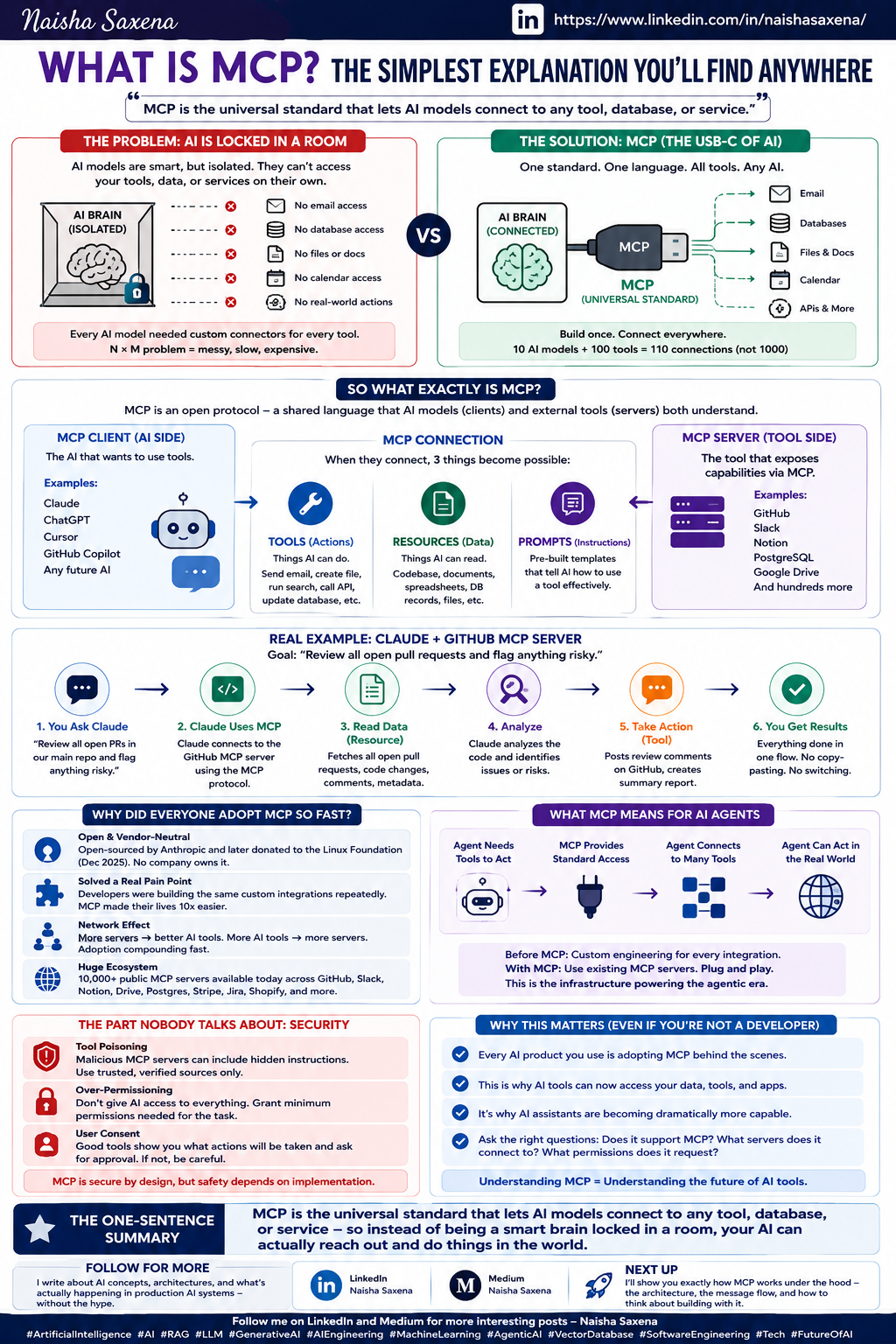
The Model Context Protocol (MCP) provides a clean place to expose this surface. Instead of an agent shelling out to aws s3 cp, the developer gives it typed tools: publish_site(content, visibility="private"), set_link_expiry(site, days=7), add_to_allowlist(site, email), get_analytics(site). The access-control model lives in the tool layer, enforced and audited, instead of improvised by the model inside a bash command. "The agent reasons about intent, and the tools enforce policy," the post says. That separation is the whole game.

The guardrail that matters most

The single most useful guardrail the developer landed on: the agent can draft and stage a link, but flipping something to fully public stays a deliberate, reviewable step. It keeps the worst failure mode at "a draft sat private a little too long" instead of "an agent published the wrong thing to the open web."

Key Takeaways

  • Thryvate argues AI agents need five design properties for safe web publishing: default-private, revocable, expiring, per-viewer analytics, and idempotent updates.
  • MCP tools enforce policy while the model handles intent.

What to watch

Watch for the MCP ecosystem to adopt these design properties as a de facto standard for agent publishing tools. The key metric: how many MCP servers for publishing include default-private and revocability as first-class parameters rather than afterthoughts.


Source: dev.to

Source: gentic.news · · author= · citation.json

AI-assisted reporting. Generated by gentic.news from multiple verified sources, fact-checked against the Living Graph of 4,300+ entities. Edited by Ala SMITH.

Following this story?

Get a weekly digest with AI predictions, trends, and analysis — free.

AI Analysis

The post correctly identifies a blind spot in the current agent tooling ecosystem. Most MCP servers for file or document operations treat publish as a simple write-to-storage operation, ignoring the access-control and audit requirements that become critical when an autonomous agent is the publisher. The five properties are not novel in the web application world—they're basic web security hygiene—but their translation to the agent context is overdue. The most interesting structural observation is the separation of intent and policy. The post argues that the model should reason about intent ("share this with the investor") while the tools enforce policy (private by default, expiring, owner-scoped). This mirrors the architecture of capability-based security systems and is a pattern that could generalize beyond publishing to other agent actions like sending emails, modifying databases, or posting on social media. The contrarian take: the post may underestimate the complexity of revocation in practice. Revoking a URL is easy; revoking a URL that has already been cached by search engines, shared in Slack threads, or embedded in downstream documents is not. The post doesn't address cache invalidation or the distributed nature of web content, which is the harder half of the revocation problem.
This story is part of
Claude Code's Campus Conquest Flips Anthropic's Talent Pipeline, Leaving Google's Academic Edge in Doubt
Viral adoption at MIT and Stanford transforms Claude Code from product into recruiting funnel, threatening Google's long-held research talent dominance
Compare side-by-side
Model Context Protocol vs CDN (Content Delivery Network)
Enjoyed this article?
Share:

AI Toolslive

Five one-click lenses on this article. Cached for 24h.

Pick a tool above to generate an instant lens on this article.

Related Articles

From the lab

The framework underneath this story

Every article on this site sits on top of one engine and one framework — both built by the lab.

More in Opinion & Analysis

View all